Showing posts with label Astronomy. Show all posts

Sunday, June 17, 2012

Seattle Metaphysical Library

The Student Chapter of the Special Library Association at University of Washington (SLA-UW) hosts 'library crawls' each quarter for students of the Information School. The crawl takes students to special libraries or collections in the Seattle area to introduce them to the variety of opportunities available. Students meet with librarians at the site, tour the collections and discover special libraries. A recent visit to the Seattle Metaphysical Library was written up by SLA-UW secretary Erin Boyington. Vice-Chair Violet Fox took pictures, which are available on this Flickr photo stream. A special thank to Violet and Erin for sharing the tour experience for this blog. Also check out their tour of NOAA Western Regional Center Libraries in May.
--------------------------------------------------------------
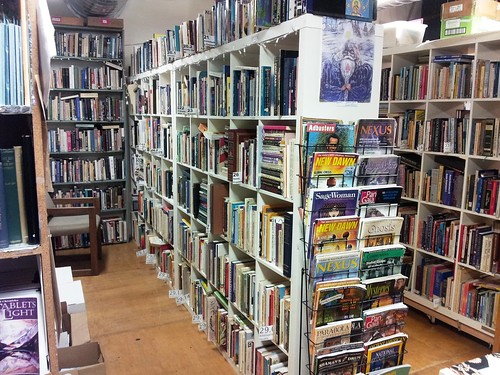
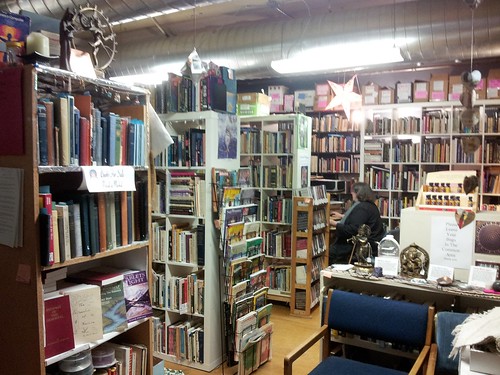
The Seattle Metaphysical Library is a small, subject-focused library that has existed in various forms for 50 years. The original collection was donated by a small group of women who compiled their private libraries and made them available as a hobby. It's been at its current location in Ballard for 6 years. On May 18th we joined Margaret Bartley, the Executive Director of the library, for a tour of this fascinating collection.

The library is open to the public and has a selection of books for sale (both in person and online), but only members can check out books for three weeks at a time. Membership costs $30 a year, and there are about 200 people on the roster. The library organizes events such as classes, workshops, and speakers on a variety of subjects related to its members’ interests.

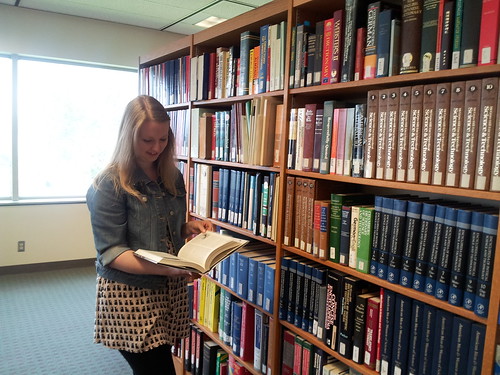
The Seattle Metaphysical Library is staffed by dedicated volunteers who are interested in metaphysical subjects. They do occasional weeding, reorganization, check out books to members, and make passers-by feel welcome as they enjoy the library’s offerings. Ron, one of the volunteers, said that he considers his work there as a kind of “sacred duty”, which he has been doing now for many years. He explained that “A lot of my metaphysical ideas have developed over time from reading in the library.” Another volunteer, Cathy, agreed: “Being around so many different types of thought opens your mind.”

The library’s eccentric holdings, available to browse online, consist entirely of personal donations. The advantages of browsing and serendipitous finding in this collection are obvious to its users, who may have difficulty finding books about their areas of interest through Amazon or general bookstores.

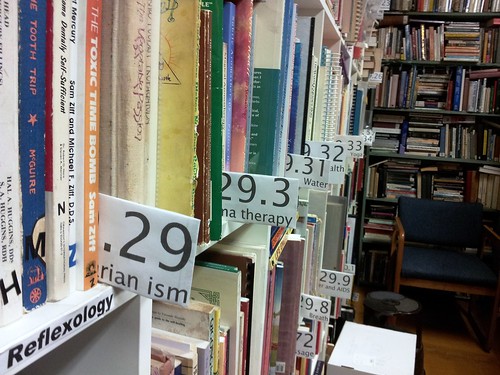
The library's materials are well-organized by a customized cataloging system which allows for the addition of new categories as needed. Here are a few examples of the categories in the library, which are grouped alphabetically:

Alchemy
Astrology
Bibles
Buddhism
Cookbooks
Elves, Little People
ESP
Face on Mars
Fasting
Graphology
Gurdijieff
Huna
Islam
Charles W. Leadbeater
Mme. Blavatsky
Muktananda
Noah’s Ark
Nutrition
Parapsychology
Parenting
Patanjali
Radionics
Shamanism
Tarot
Theosophy
Transcendental Meditation
UFOs
Vedic

Though it may be an unconventional collection, the Seattle Metaphysical Library’s major concerns and needs are like any other library: preservation, access, organization, and promotion of the unique resources it offers.
Seattle Metaphysical Library sidewalk sign
Seattle Metaphysical Library

Sunday, May 20, 2012

NOAA Western Regional Center Libraries

The Student Chapter of the Special Library Association at University of Washington (SLA-UW) hosts 'library crawls' each quarter for students of the Information School. The crawl takes students to two or three special libraries or collections in the Seattle area to introduce them to the variety of opportunities available. Students meet with librarians at the site, tour the collections and discover special libraries. The most recent library crawl hosted by SLA-UW visited the National Oceanic and Atmospheric Administration Western Regional Center. Two SLA-UW officers submitted pictures and notes from the tour for this week's post. A special thank to Ann Pool for the text, and Violet Fox for the photos. You can access the Flickr stream for additional images from their crawl.
____________________________________

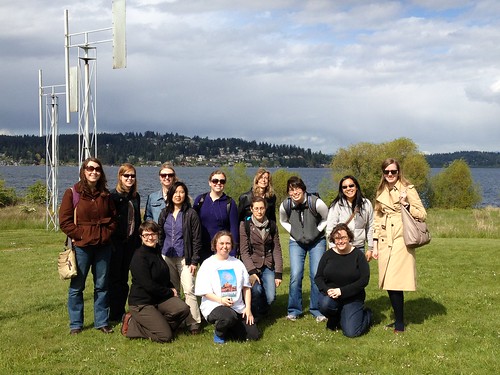
SLA-UW’s latest library crawl on May 9th took us to two of the three National Oceanic and Atmospheric Administration (NOAA) libraries in Seattle: the NOAA Seattle Regional Libraryand the National Marine Mammal Laboratory (NMML) Library, both located in Sand Point.(The third is the Northwest and Alaska Fisheries Science Centers Library in Montlake.) Sixteen students attended this tour led by Brian Voss, the NOAA library director and a UW MLIS graduate.

Brian’s undergraduate background is in zoology and conservation ecology. He then went into NOAA’s fisheries observer program for a couple of winters before ending up in library school. During that time he worked in the Natural Sciences Library and for the Gates Foundation. He did a directed field work (DFW) at the Marine Mammal library and then went right to NOAA after receiving his MLIS. Brian was most interested in the tech classes, and said that the best ones taught concepts that are used regardless of changes in technology.

The three libraries serve the Western region offices. The NOAA library focuses on physical oceanography and atmospheric science. The primary use of the NOAA library is journal subscriptions to support research. Some nautical charts have been digitized but there are usability issues with viewing them online. The library also supports some email reference with the public and non-NOAA-affiliated social scientists. NOAA is now partnering with the National Technical Information Service (NTIS) on a pilot program to create a digital repository; this was prompted by documents from the Deepwater Horizon oil spill.

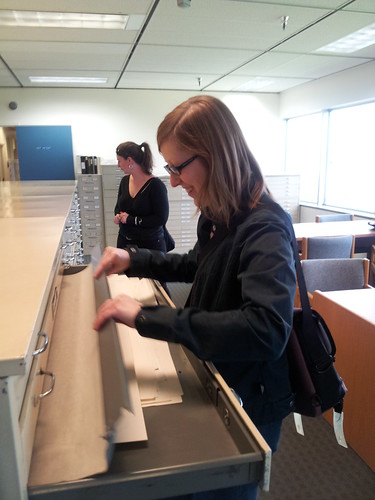
Sonja Kromann, another UW MLIS grad, directs the NMML library. Its walls are lined with file cabinets containing articles reprinted from print journals the library didn’t subscribe to. Articles are no longer added to the files as periodicals are now available online, but the existing articles are still only indexed in the card catalog. The library also contains a collection of theses and archives, including the Fur Seal Archive which was Brian’s DFW project.

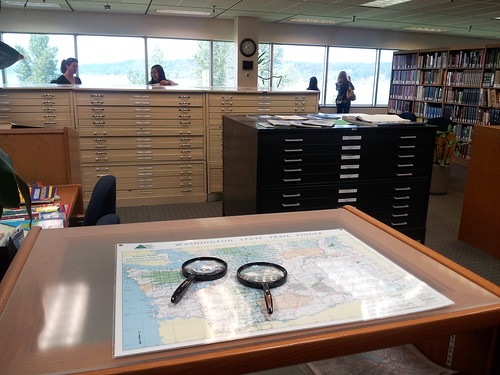
If solo librarianship or scientific libraries sounds interesting, you might want to consider a DFW at NOAA. Brian has worked with many DFW students in the past and has a couple of project ideas, including cataloging and inventorying the regional libraries’ online subscriptions, depending on your interests. After the tour we walked down to the Sound Garden sculpture located on NOAA's grounds and then enjoyed happy hour at the Monkey Pub. NOAA library nautical charts
NOAA library nautical charts
NOAA library reading room
NMML library
Sound Garden

Saturday, March 24, 2012

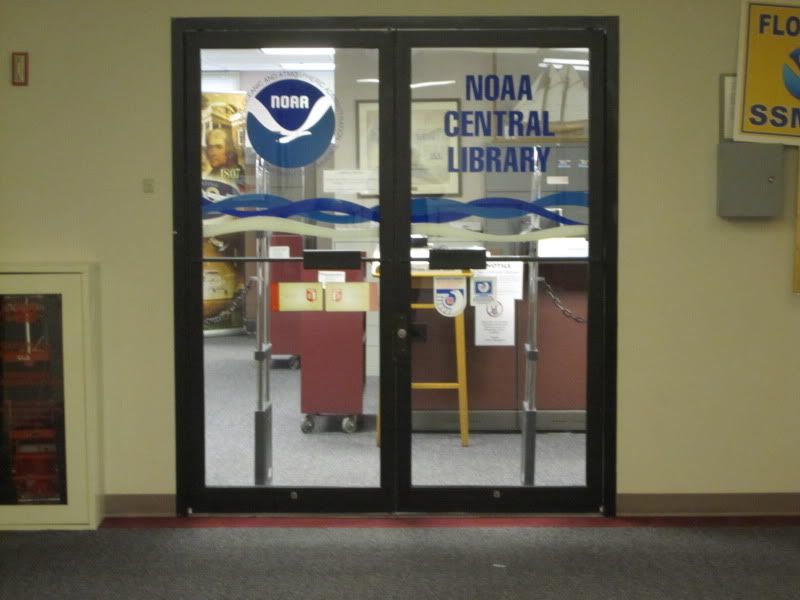
National Oceanic and Atmospheric Administration Central Library

The National Oceanic and Atmospheric Administration (NOAA) has roots as a scientific research agency back to 1807 with the Coast Survey. The NOAA library network provides access to scientific information to NOAA staff, visiting researchers, and members of the public. While the library itself is only accessible by special request for non-NOAA affiliated researchers, much of the collections have been made available online through the central library website, and libraries in the network. See the NOAA Libraries Network to find out more about the national system of NOAA Libraries.


The library uses a union catalog to increase search capabilities to all NOAA collections across the country. NOAA records are also shared in OCLC WorldCat. The central library, and many libraries in the network participate in inter-library loan (ILL) and can provide materials to the general public through ILL requests. The NOAA central library website provides a wealth of information, and access to many aspects of the collection in digital form. See the Collections page for information on virtual libraries, links to digital libraries, and further information on the subject areas of the collection. The library also provides access to reference services to any member of the public through chat, email, or phone.

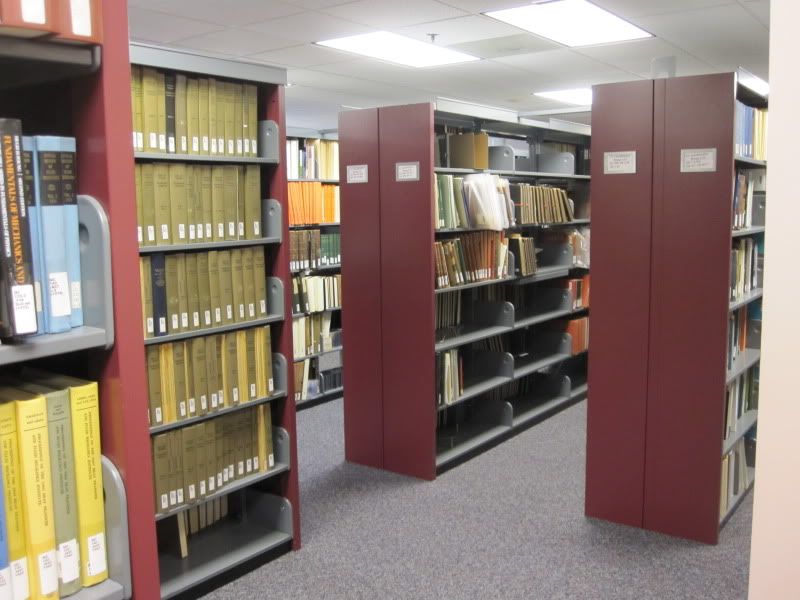
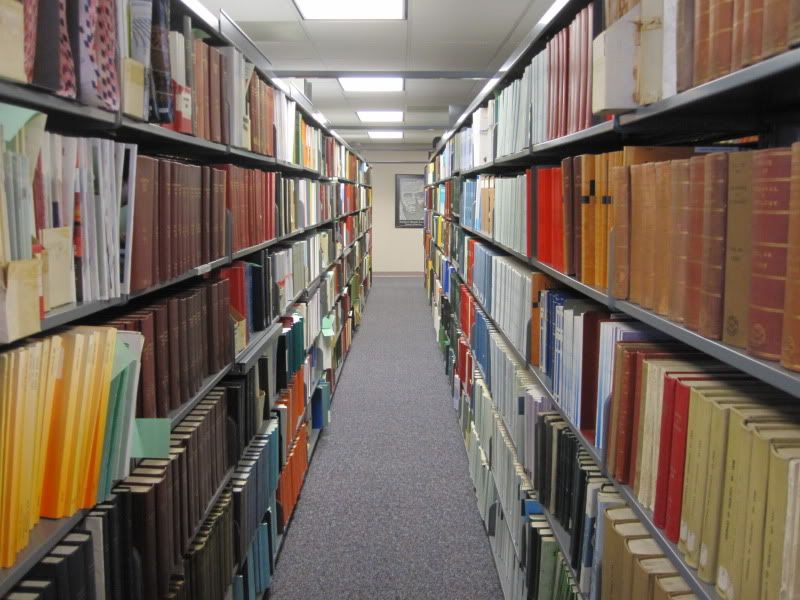
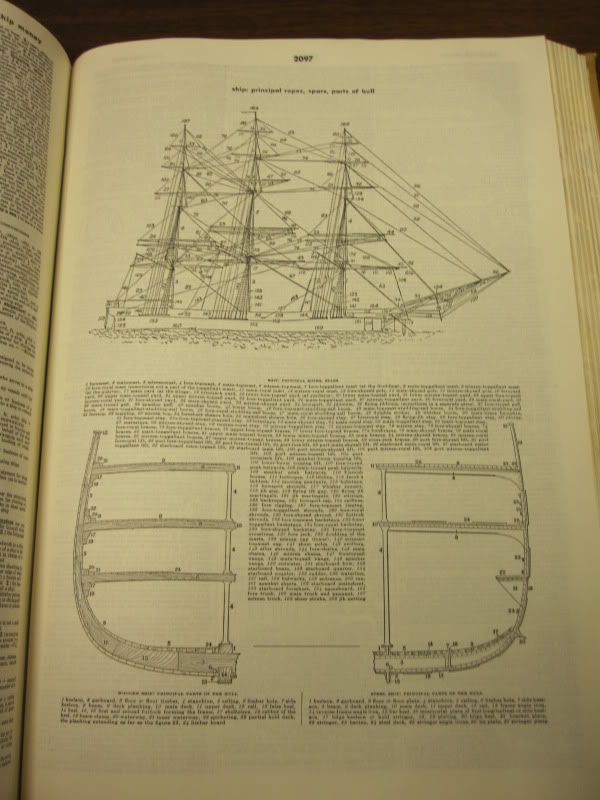
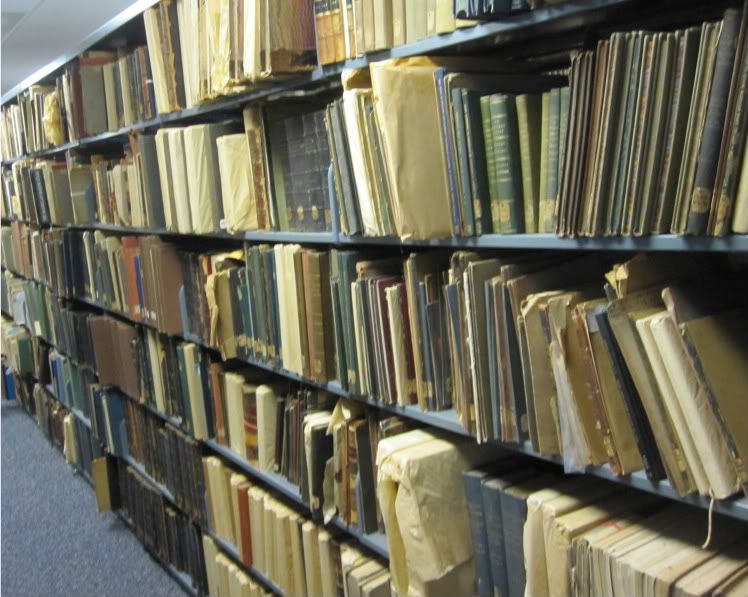
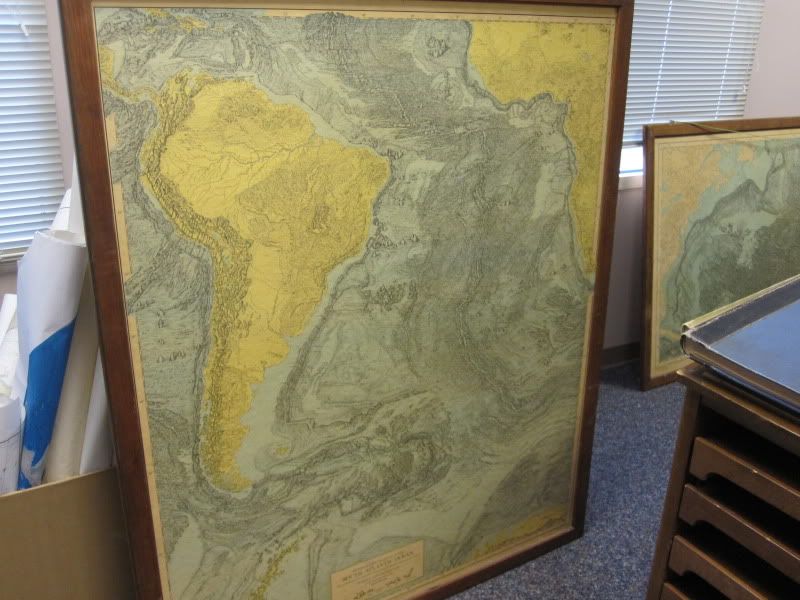
The library space is a labyrinth containing a vast array of journals, monographs, maps, media, and rare items. To find out more about some of the rare and archival materials at NOAA Central, see this page. I recently volunteered to modify catalog records and reformat some web pages for a digital collection of data. While there I wandered the stacks and snapped some pictures of the shelves, and some of the materials on display.


Thursday, March 15, 2012

The James Melville Gilliss Library

The James Melville Gillis Library collection dates from 1830. The library was developed as part of the US Naval Observatory, and today is found in the main building, built in 1893, and sits on hilly ground in the Georgetown area of Washington, DC. A brief history of the observatory can be read here. The library is housed in the wing on the right of this photo of the main building on the grounds as seen in this picture taken from the library website.

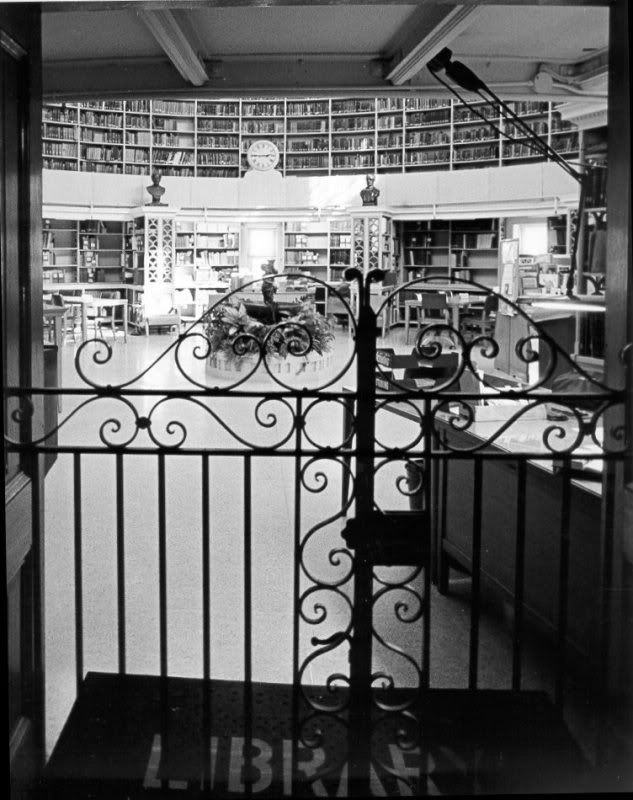
As you enter the building and are greeted with display cases on the right and left showcasing items from the collection, you may feel as if you are walking back in time. Pass the telescope and take a right down a hallway with high arched ceilings for the first glimpse of the space through large double iron gates.
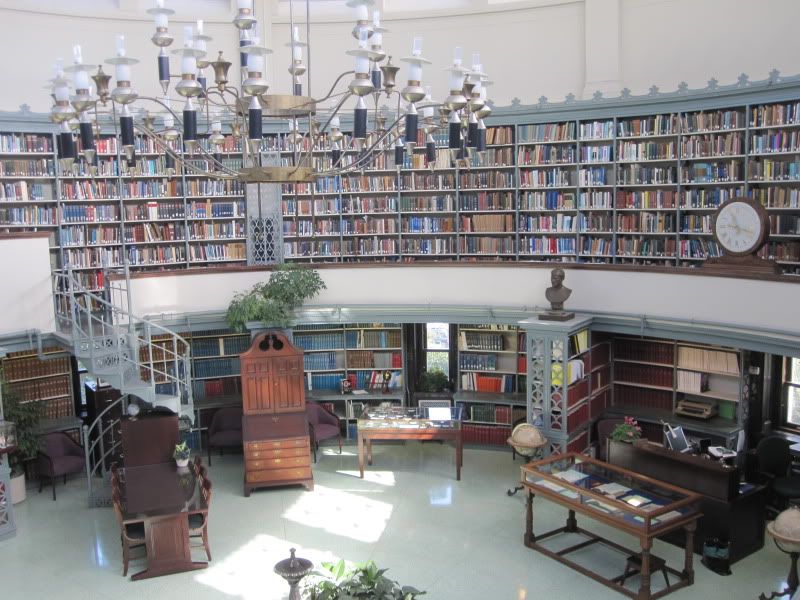
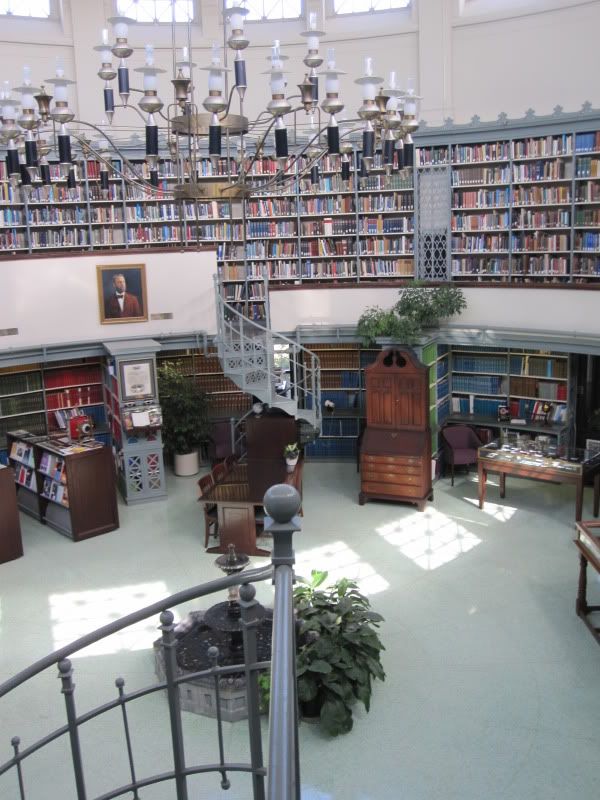
This image is taken from the James Melville Gillis Library collection online. The following images were taken during a tour with the library manager, Sally Bosken.


The library itself is generally closed to the public because of security on the grounds. Many items are available through inter-library loan, or researchers may visit upon special request. The library has two staff who work with the naval staff on site and assist with research, publications, and information access. The collections focus on astronomy and hard science, publications of the US Naval Observatory, and contain both print and electronic resources. The library also maintains an amazing collection of over 800 pre-19th century rare books, including works by Galileo, Copernicus, Einstein and Newton. The library is architecturally and historically fascinating. The grounds are beautiful. This is indeed a special place, and an amazing special library.

The library does occasionally take on volunteers. If you are a library science current student or recent graduate interested in astronomy collections, cataloging rare books, or other possible projects please contact the library using their online request form.

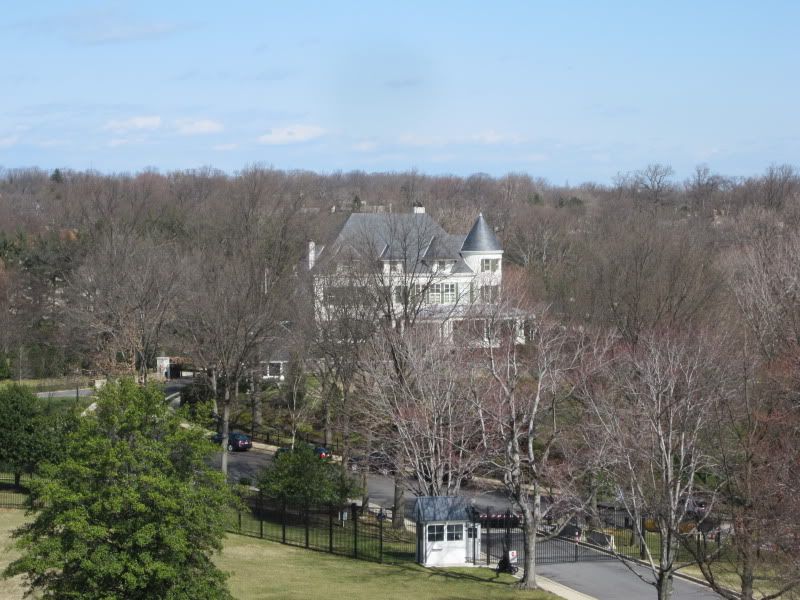
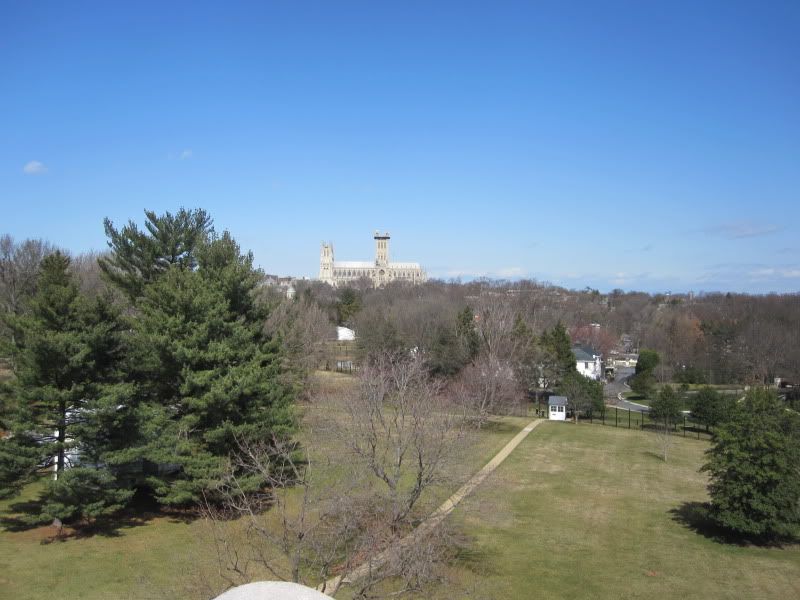
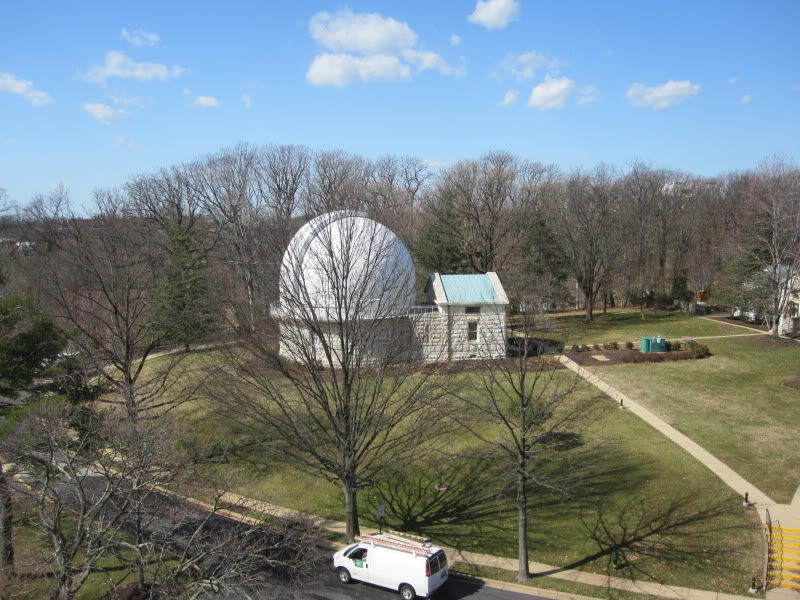
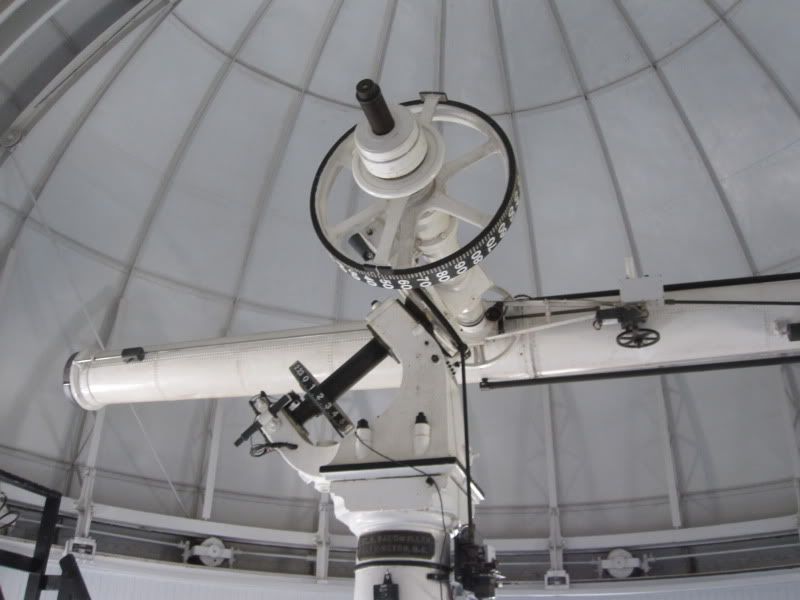
The Vice President lives on the grounds, and the library space is often used for for special events such as dinners or vice presidential interviews. These are pictures of the view from the telescope roof on the left side wing of the building, of the telescope still used to mark official US time, and the telescope inside the dome on the main observatory building.