Showing posts with label science. Show all posts

Sunday, October 21, 2012

San Diego Zoo Library

Zoos have libraries. Go figure. I discovered this bit of information recently when I saw a job posting for an Associate Director of Library Services at the San Diego Zoo Global Library. The position closed to applications on October 11th, however here is the link to the job posting for anyone interested, and this is a link to a .pdf I've uploaded to Google Docs for posterity. The existence of libraries in zoos had never occurred to me. Then I realized, of course zoos have libraries. Zoos need access to veterinary collections for animal care, biological research, zoo history, current practice in animal care, to name a few needs.

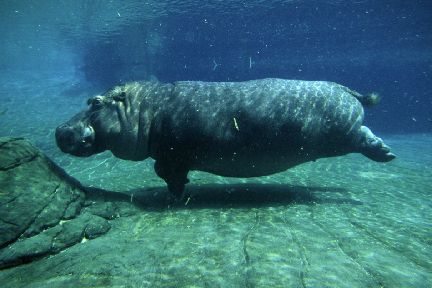
I spent some time on the San Diego Zoo's library website and was impressed with the resources available. Check out these Fact Sheets. They are HTML pages that cover a breadth of topics. I dig the hippopotamus photo.


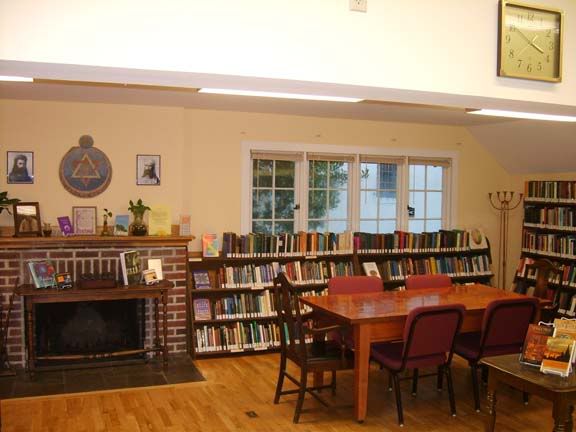
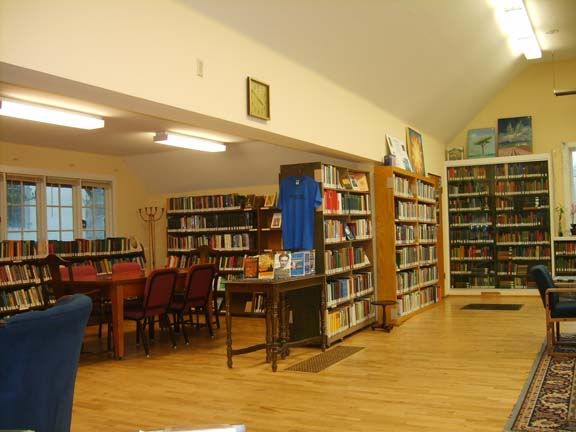
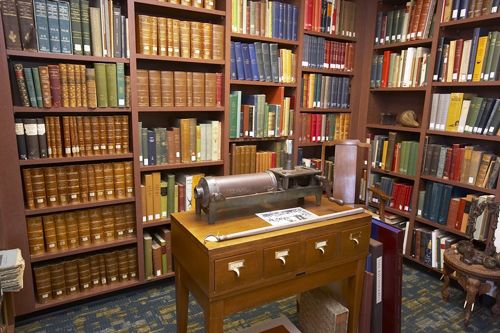
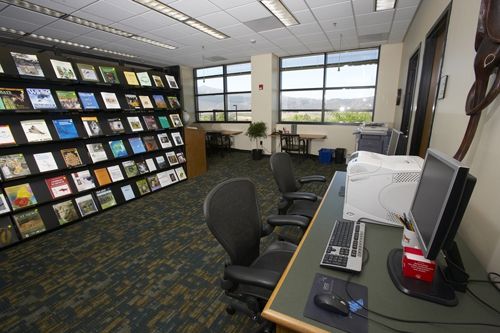
The zoo library has over 11,000 books and 400+ journal titles. There are archives and rare books, as well as general reference services and information. It looks like a great library resource. I borrowed some photos from the website to give you a look. Click the photos to visit the library home page.


Sunday, October 7, 2012

Historical Medical Library of the College of Physicians of Philadelphia

A few weeks ago I spent a weekend in Philadelphia with my husband. It was my first time in the city and we did the usual visit to the birthplace of democracy; Independence Hall, the Liberty Bell, Betsy Ross's house, Ben Franklin's print shop and post office, and Elfreth's Alley. We barely scratched the surface of things to do, but only had one day in the city. We decided to spend the afternoon visiting the Mütter Museum.
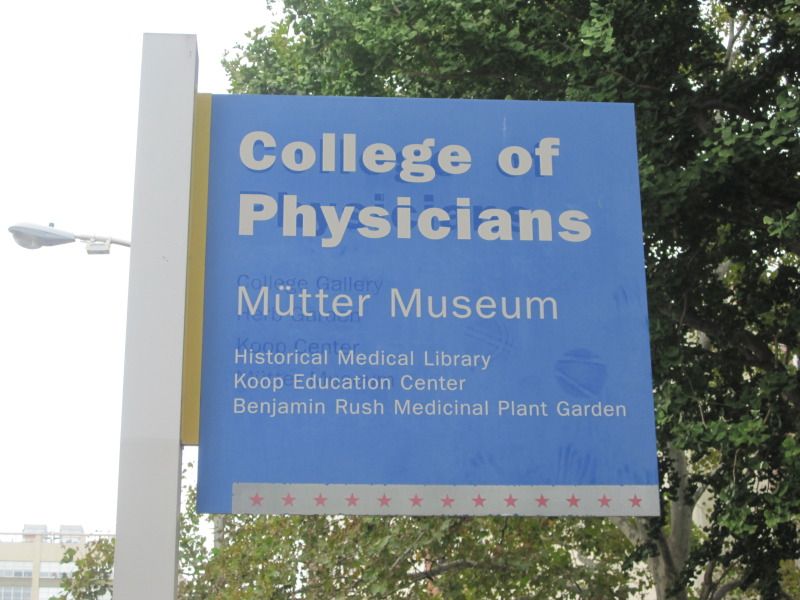
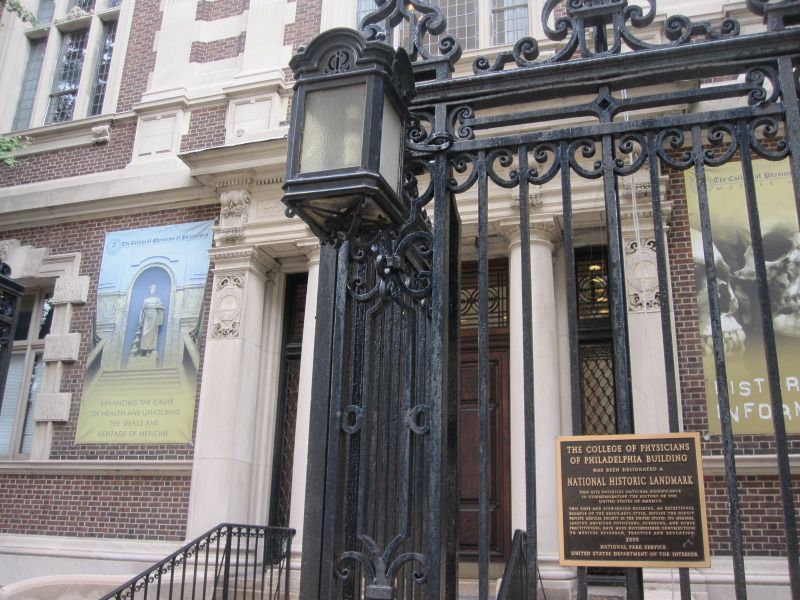
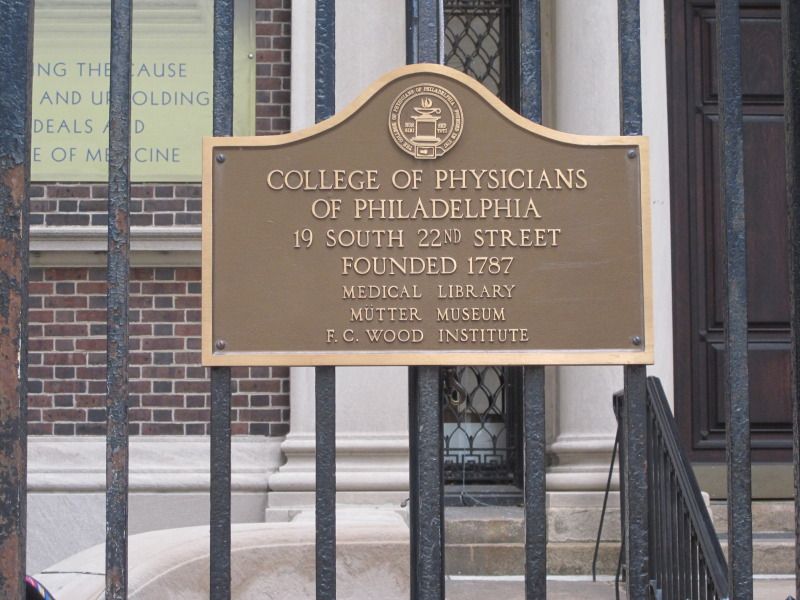
Mutter Museum and Medical Library Sign
The museum is amazing. It definitely has disturbing elements. For me, the wall of fetal deformities was a little difficult to take in. There were exhibits linking Grimm's Fairy tales to medical conditions, and I learned more than I ever intended about skin conditions and the assassinations of Lincoln and Garfield. Check out this article from the British Society for the History of Science Travel Guide for more information about the museum. There was a wonderful quote on a display description that sums up the importance of the collection well.

"A great museum collection is as important to medical education as a great library because specimens are nature's books"

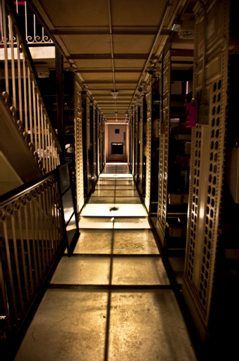
picture of the stacks from the library website While at the Mütter I learned about the Historical Medical Library also housed in the building. Established in 1788, it's one of the world's premier research collections into the history of medicine. Over 400 incunables, manuscripts, archives, and 19th and 20th century medical journals. Sadly, I did not have an appointment, so I could not visit the stacks. The library is open by appointment only Tuesday, Wednesday, and Thursday, 10:00am to 4:00pm.

If you want to see specifics, you can search the catalog online. The Catalog search help is fairly comprehensive if you would like a tutorial in how to use their catalog system.

Also available for distance visitors are the digital resources, Digital Books and two digitized 18th Century Manuscripts.

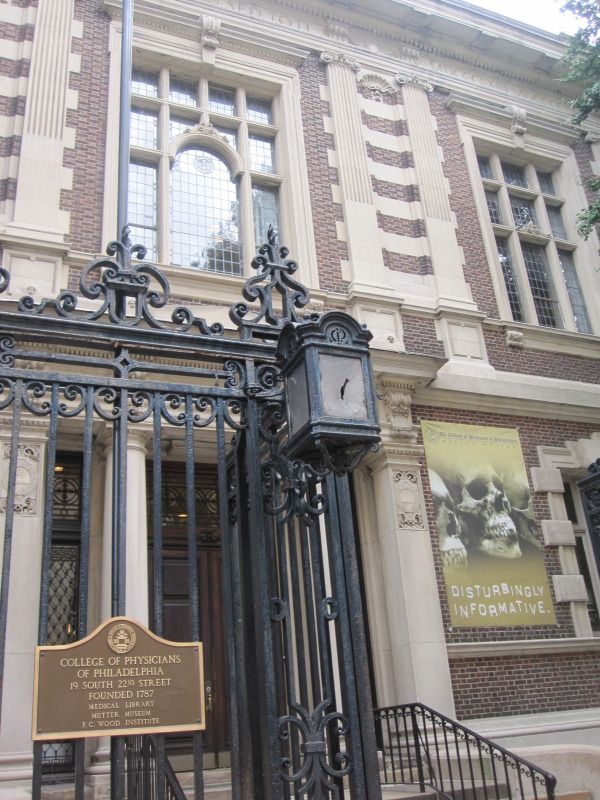
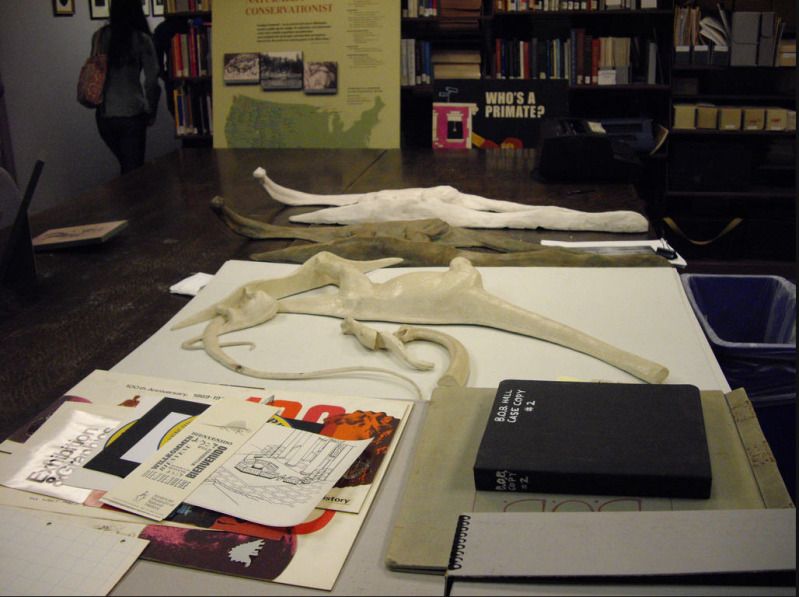
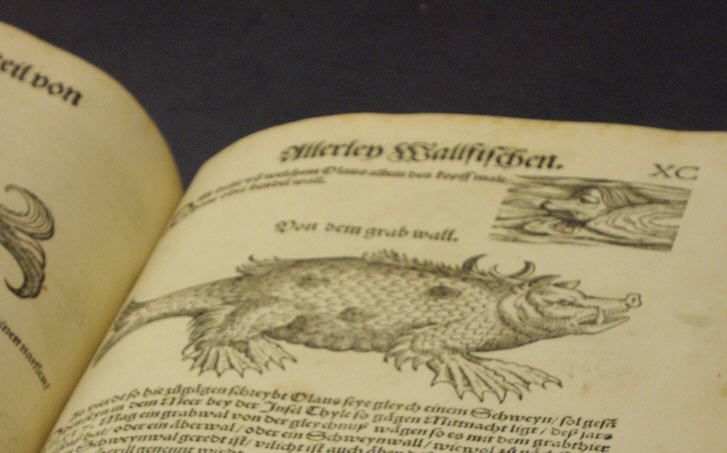
See the library website for history of the collection, or read this very informative article from the Pennsylvania Center for the Book, which is part of the Literary and Cultural Heritage Map. Photos are not allowed within the museum so these shots of the door and the one taken from the library website above will have to satisfy your visual cravings.
Mutter Museum and Medical Library Entrance

Sunday, August 5, 2012

American Museum of Natural History Library

This week's post is about a library visit by the Library & Information Science Student Association. A former officer and recent graduate of the School of Communication & Information at Rutgers directed me to their pictures and provided some details about their visit to the American Museum of Natural History Library in New York, NY.

The library at the American Museum of Natural History was established with the founding of the museum in 1869. This library is one of the largest natural history libraries in the world. Among the collections, the library also maintains the astronomy collection from the Hayden Planetarium, which was transferred in 1997.

The website is worth a perusal if you don't have the opportunity to check this library out in person. The Congo Expedition of 1909-1015 is very well done with multimedia t presentations, impressive gallery with QuickTime videos and images of 3D visuals and high resolution display, and well presented access to the transcripts of the introduction. The Darwin Manuscript Project with a cleverly called Darbase is also worth a look. Check this this link for the list of digital collections. To whet you appetite for an in person visit, browse their catalog online.

The Flickr page from the Rutgers LISSA visit give some great perspective of the behind the scenes. These images were clipped from the Flickr page and link to the original Flickr files.


Sunday, May 20, 2012

NOAA Western Regional Center Libraries

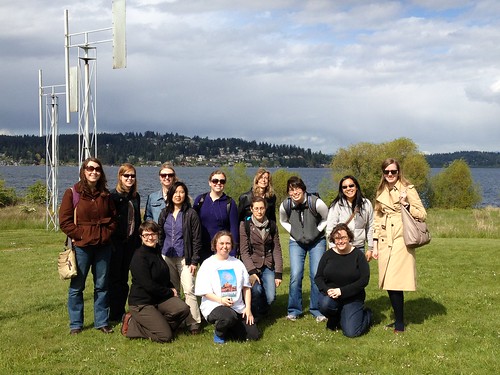
The Student Chapter of the Special Library Association at University of Washington (SLA-UW) hosts 'library crawls' each quarter for students of the Information School. The crawl takes students to two or three special libraries or collections in the Seattle area to introduce them to the variety of opportunities available. Students meet with librarians at the site, tour the collections and discover special libraries. The most recent library crawl hosted by SLA-UW visited the National Oceanic and Atmospheric Administration Western Regional Center. Two SLA-UW officers submitted pictures and notes from the tour for this week's post. A special thank to Ann Pool for the text, and Violet Fox for the photos. You can access the Flickr stream for additional images from their crawl.
____________________________________

SLA-UW’s latest library crawl on May 9th took us to two of the three National Oceanic and Atmospheric Administration (NOAA) libraries in Seattle: the NOAA Seattle Regional Libraryand the National Marine Mammal Laboratory (NMML) Library, both located in Sand Point.(The third is the Northwest and Alaska Fisheries Science Centers Library in Montlake.) Sixteen students attended this tour led by Brian Voss, the NOAA library director and a UW MLIS graduate.

Brian’s undergraduate background is in zoology and conservation ecology. He then went into NOAA’s fisheries observer program for a couple of winters before ending up in library school. During that time he worked in the Natural Sciences Library and for the Gates Foundation. He did a directed field work (DFW) at the Marine Mammal library and then went right to NOAA after receiving his MLIS. Brian was most interested in the tech classes, and said that the best ones taught concepts that are used regardless of changes in technology.

The three libraries serve the Western region offices. The NOAA library focuses on physical oceanography and atmospheric science. The primary use of the NOAA library is journal subscriptions to support research. Some nautical charts have been digitized but there are usability issues with viewing them online. The library also supports some email reference with the public and non-NOAA-affiliated social scientists. NOAA is now partnering with the National Technical Information Service (NTIS) on a pilot program to create a digital repository; this was prompted by documents from the Deepwater Horizon oil spill.

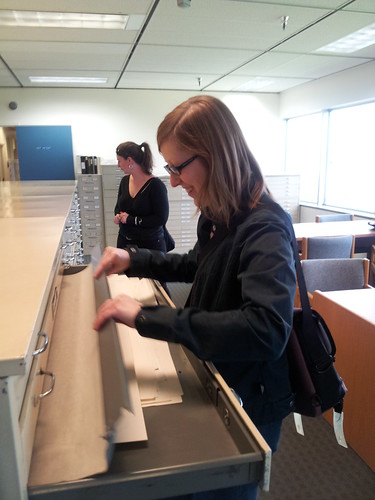
Sonja Kromann, another UW MLIS grad, directs the NMML library. Its walls are lined with file cabinets containing articles reprinted from print journals the library didn’t subscribe to. Articles are no longer added to the files as periodicals are now available online, but the existing articles are still only indexed in the card catalog. The library also contains a collection of theses and archives, including the Fur Seal Archive which was Brian’s DFW project.

If solo librarianship or scientific libraries sounds interesting, you might want to consider a DFW at NOAA. Brian has worked with many DFW students in the past and has a couple of project ideas, including cataloging and inventorying the regional libraries’ online subscriptions, depending on your interests. After the tour we walked down to the Sound Garden sculpture located on NOAA's grounds and then enjoyed happy hour at the Monkey Pub. NOAA library nautical charts
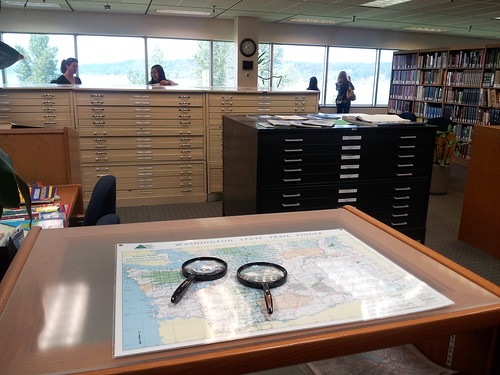
NOAA library nautical charts
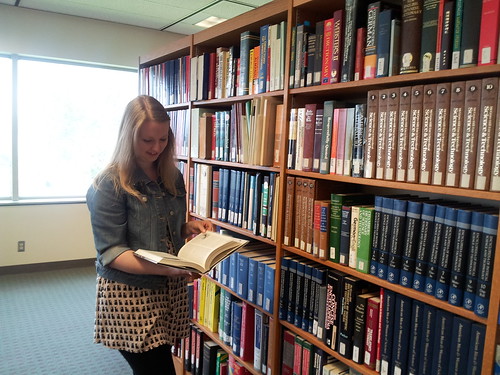
NOAA library reading room
NMML library
Sound Garden

Saturday, March 24, 2012

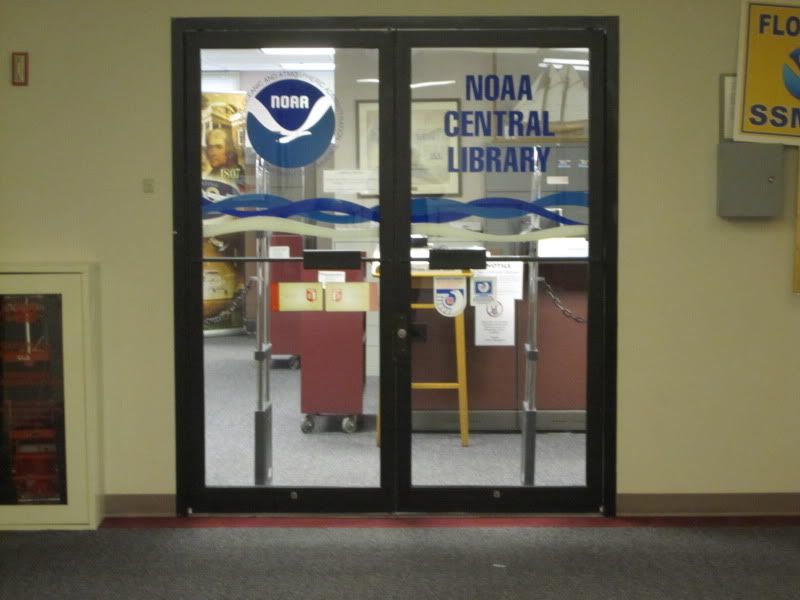
National Oceanic and Atmospheric Administration Central Library

The National Oceanic and Atmospheric Administration (NOAA) has roots as a scientific research agency back to 1807 with the Coast Survey. The NOAA library network provides access to scientific information to NOAA staff, visiting researchers, and members of the public. While the library itself is only accessible by special request for non-NOAA affiliated researchers, much of the collections have been made available online through the central library website, and libraries in the network. See the NOAA Libraries Network to find out more about the national system of NOAA Libraries.


The library uses a union catalog to increase search capabilities to all NOAA collections across the country. NOAA records are also shared in OCLC WorldCat. The central library, and many libraries in the network participate in inter-library loan (ILL) and can provide materials to the general public through ILL requests. The NOAA central library website provides a wealth of information, and access to many aspects of the collection in digital form. See the Collections page for information on virtual libraries, links to digital libraries, and further information on the subject areas of the collection. The library also provides access to reference services to any member of the public through chat, email, or phone.

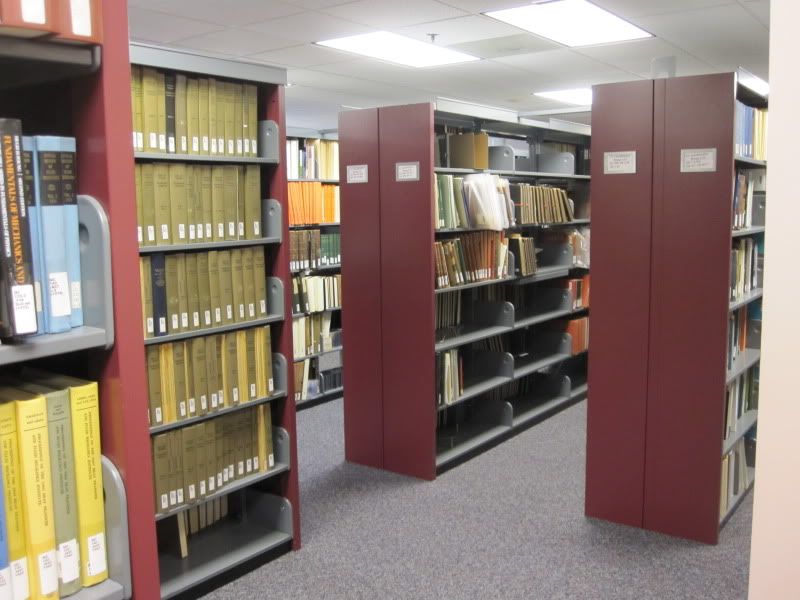
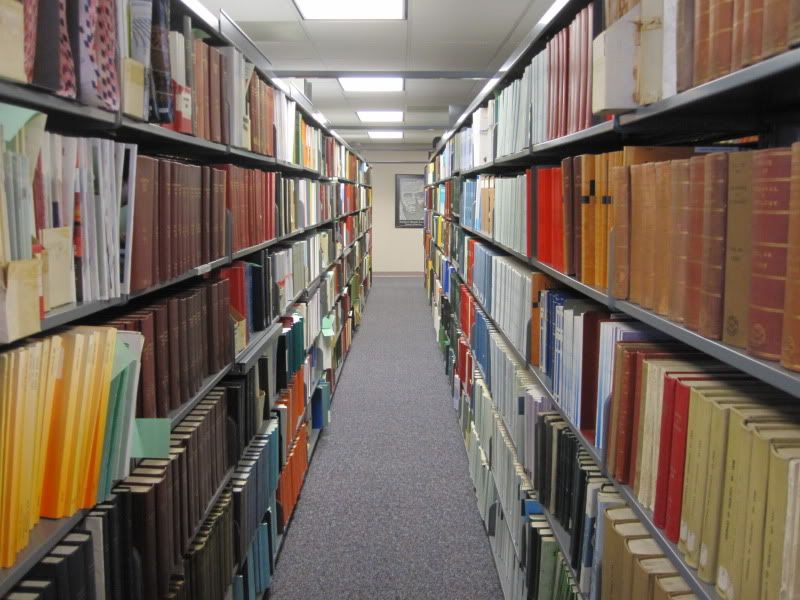
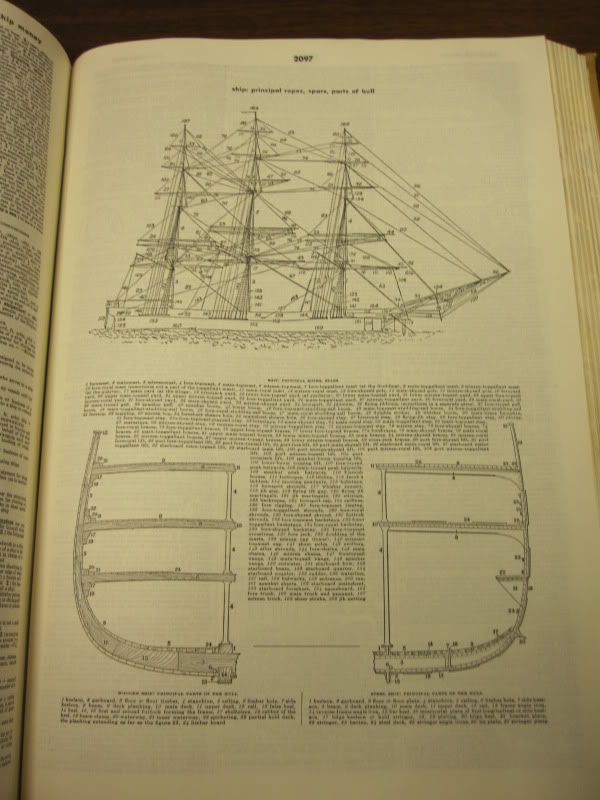
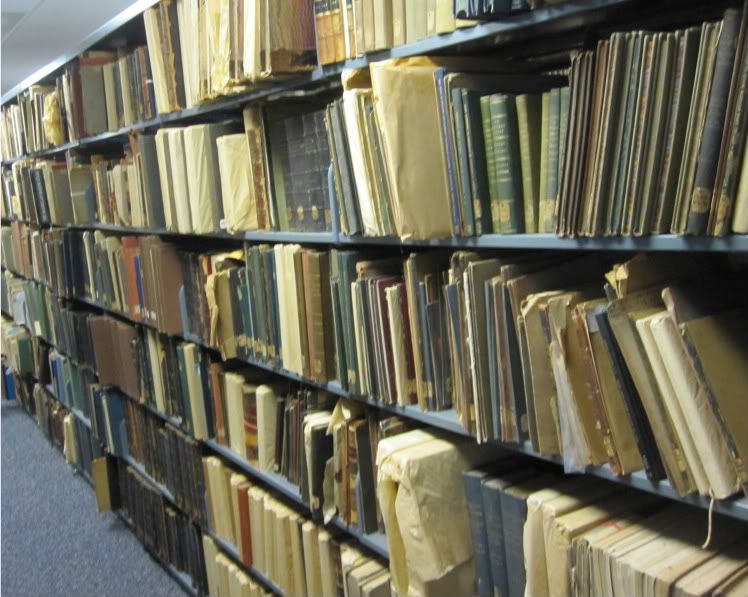
The library space is a labyrinth containing a vast array of journals, monographs, maps, media, and rare items. To find out more about some of the rare and archival materials at NOAA Central, see this page. I recently volunteered to modify catalog records and reformat some web pages for a digital collection of data. While there I wandered the stacks and snapped some pictures of the shelves, and some of the materials on display.


Sunday, March 18, 2012

National Institute of Standards and Technology Library

I recently had the opportunity to tour the National Institute of Standards and Technology library, museum, and archive in Gaithersburg, MD. Unfortunately, I did not take any pictures on the tour. Here is a picture of the external building from the NIST library website:

The library building also houses a museum collection with artifacts from NIST history, such as the official meter stick, and the very first neon sign. The library staff has developed a digital museum with collections, as well as photographic representations of museum artifacts. The current featured collection is Standardization of Women's Clothing. See their photo gallery for collections of photographs from the museum collection.

The NIST campus is not open to the public, however some access to NIST publications is available through request from the website. Requests to visit the museum are granted in special cases. See the Library FAQ section for more information. The library does offer a vast amount of information about the collections through their virtual library portal. The library is an amazing collection of scientific research and technology information. The collections are primarily for use by staff, however the reference librarians may respond to information requests, or direct users to publicly accessible resources for information.

The campus itself is also interesting, in that it is a secure facility that has become somewhat of a nature preserve. The grounds are kept fairly natural, and contain numerous deer and other wildlife. In 1966 when the agency moved to the Gaithersburg campus, a direct decedent to the famous Apple tree which inspired Sir Issac Newton. I'm told the apples taste a bit mealy and aren't very good.

Friday, March 16, 2012

Theosophical Society of Seattle Lending Library

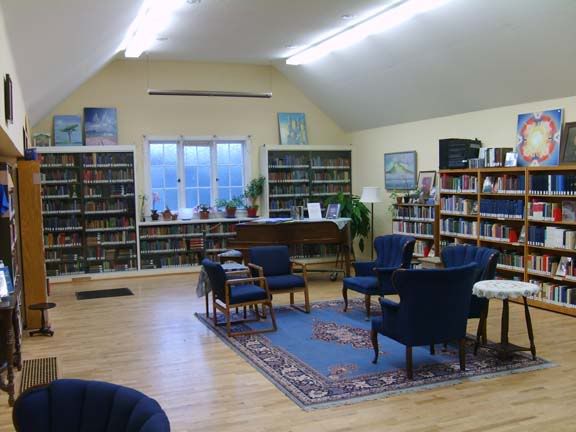
This special library is a bit off the beaten path in Seattle's Capitol Hill Neighborhood. I came across this library while searching for volunteer opportunities in libraries on Volunteer Match prior to graduate school.The Theosophical Society was founded in 1875, and operates under three primary tennants,

1. To form a nucleus of the universal brotherhood of humanity, without distinction of race, creed, sex, caste, or color

2. To encourage the comparative study of religion, philosophy, and science

3. To investigate unexplained laws of nature and the powers latent in humanity.

H.P. Blavatsky is the originating founder of the philosophy, published extensive volumes about philsophy, the theosophical society, and the occult, and is in general an interesting person you should look up and read a biography on sometime. You can check several out at The Theosophical Society in Seattle Lending Library, after paying the $30 annual membership fee. Membership fees for lending are a primary source of income for the library. The staff consists mostly of volunteers, and the space is also used as the lodge for the Seattle chapter of the Theosophical Society. The library is found behind the The Quest Bookshop and is a relaxing oasis within a very busy and vibrant neighborhood. It is worth checking out the collection and space, and the membership is a reasonable price to pay to keep this non-profit going for access to an enormous collection of about 7,000 items about philosophy, theology, the occult, founding members, and various scientific topics. Contact the librarian if you are interested in volunteering. They could always use more helpers with "overseeing the library during open hours; book repair; shelf reading, and the accessioning of new books" according to their website.

These pictures were taken in 2009 when I volunteered as the librarian on Sundays.
Thursday, March 15, 2012

The James Melville Gilliss Library

The James Melville Gillis Library collection dates from 1830. The library was developed as part of the US Naval Observatory, and today is found in the main building, built in 1893, and sits on hilly ground in the Georgetown area of Washington, DC. A brief history of the observatory can be read here. The library is housed in the wing on the right of this photo of the main building on the grounds as seen in this picture taken from the library website.

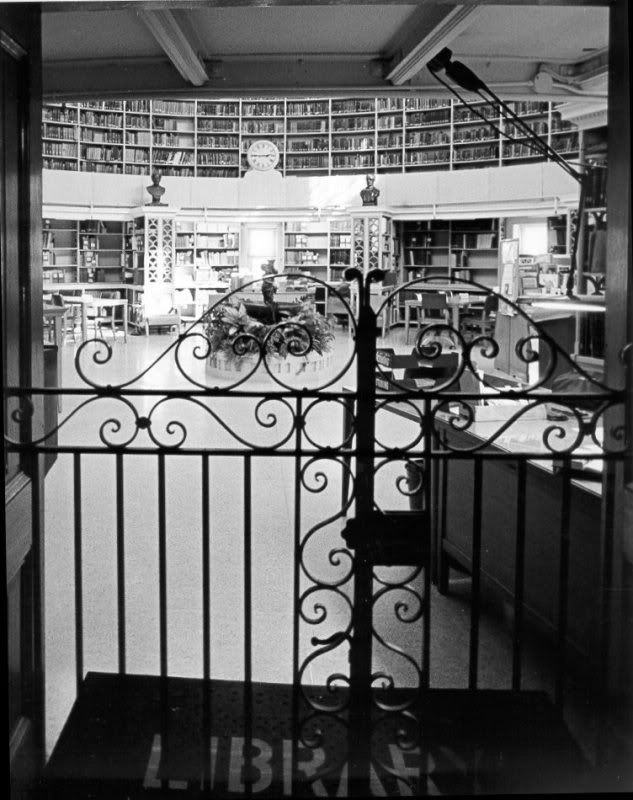
As you enter the building and are greeted with display cases on the right and left showcasing items from the collection, you may feel as if you are walking back in time. Pass the telescope and take a right down a hallway with high arched ceilings for the first glimpse of the space through large double iron gates.
This image is taken from the James Melville Gillis Library collection online. The following images were taken during a tour with the library manager, Sally Bosken.


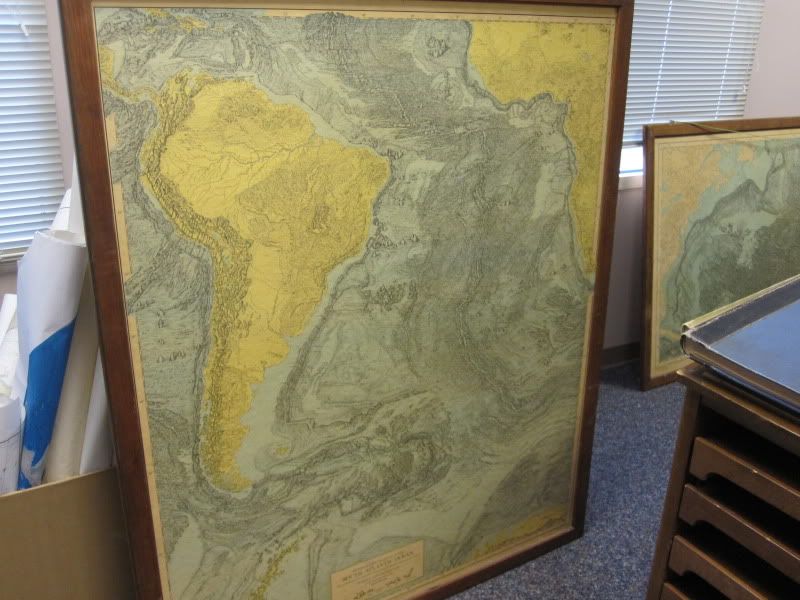
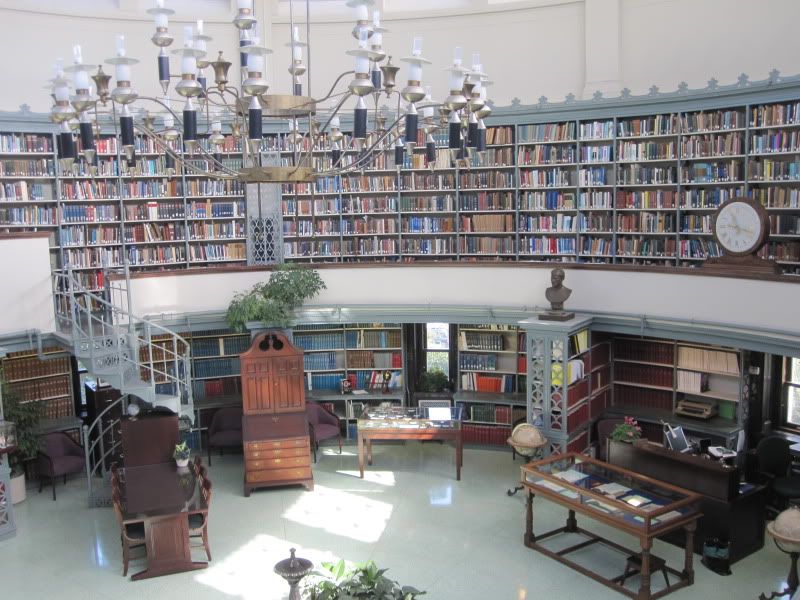
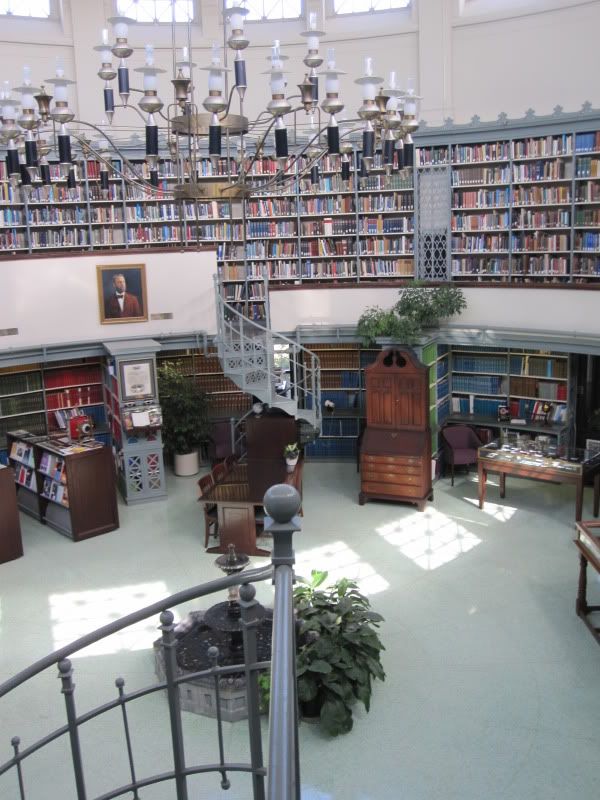
The library itself is generally closed to the public because of security on the grounds. Many items are available through inter-library loan, or researchers may visit upon special request. The library has two staff who work with the naval staff on site and assist with research, publications, and information access. The collections focus on astronomy and hard science, publications of the US Naval Observatory, and contain both print and electronic resources. The library also maintains an amazing collection of over 800 pre-19th century rare books, including works by Galileo, Copernicus, Einstein and Newton. The library is architecturally and historically fascinating. The grounds are beautiful. This is indeed a special place, and an amazing special library.

The library does occasionally take on volunteers. If you are a library science current student or recent graduate interested in astronomy collections, cataloging rare books, or other possible projects please contact the library using their online request form.

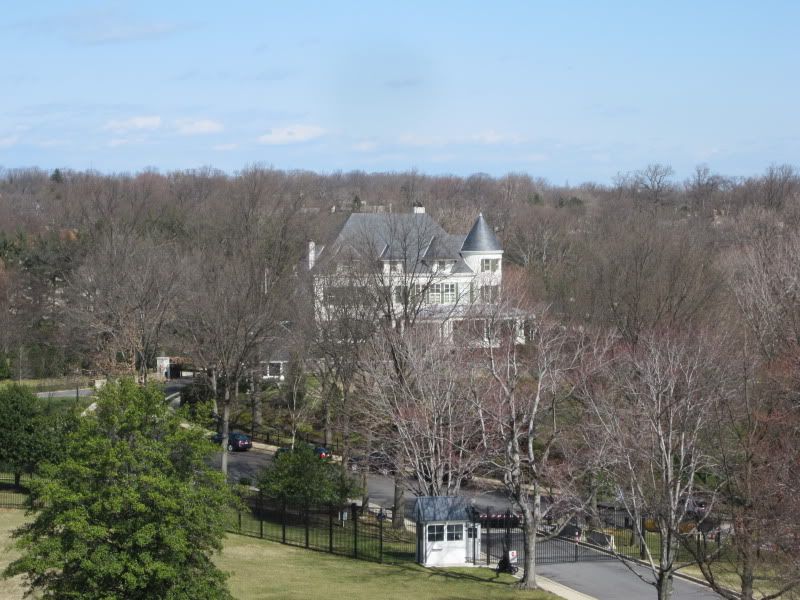
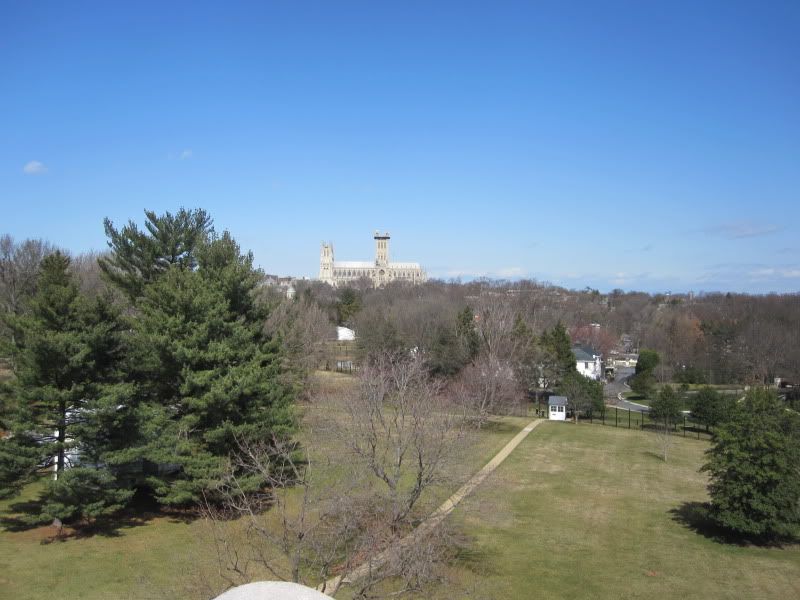
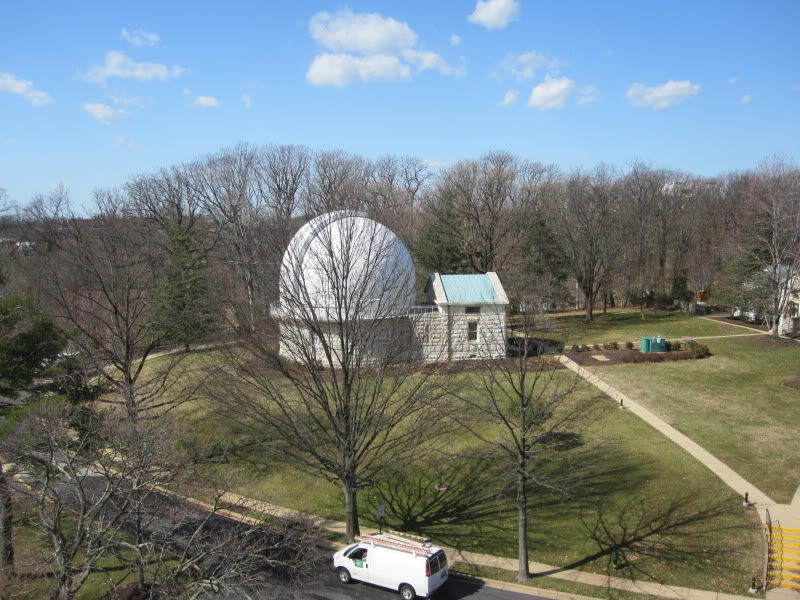
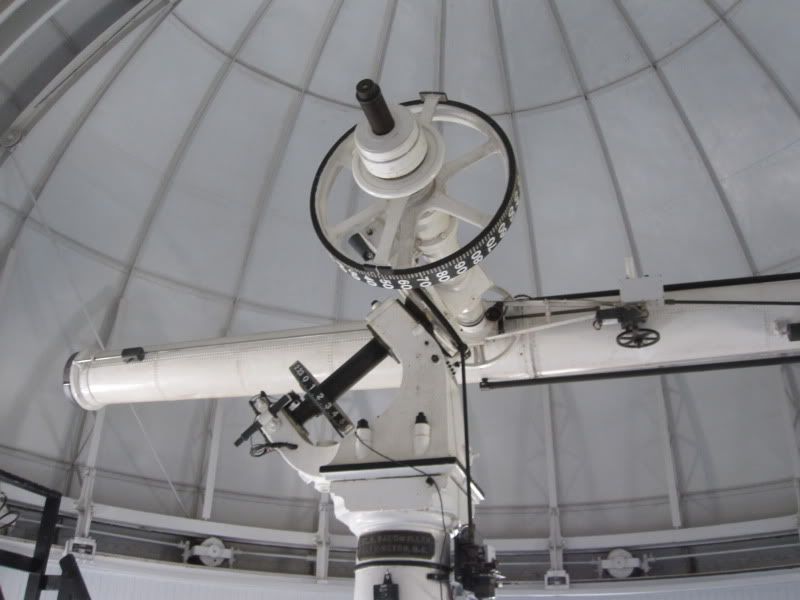
The Vice President lives on the grounds, and the library space is often used for for special events such as dinners or vice presidential interviews. These are pictures of the view from the telescope roof on the left side wing of the building, of the telescope still used to mark official US time, and the telescope inside the dome on the main observatory building.