Showing posts with label object collection. Show all posts

Sunday, October 28, 2012

Fayetteville Free Library Fab Lab and Makerspaces

This week I'd like to talk about a concept popping up in public libraries around the country, makerspaces. I've heard buzz about this concept for a while, and then saw the cover of the October issue of Library Journal, with several articles about makerspaces and decided to talk about the topic this week.

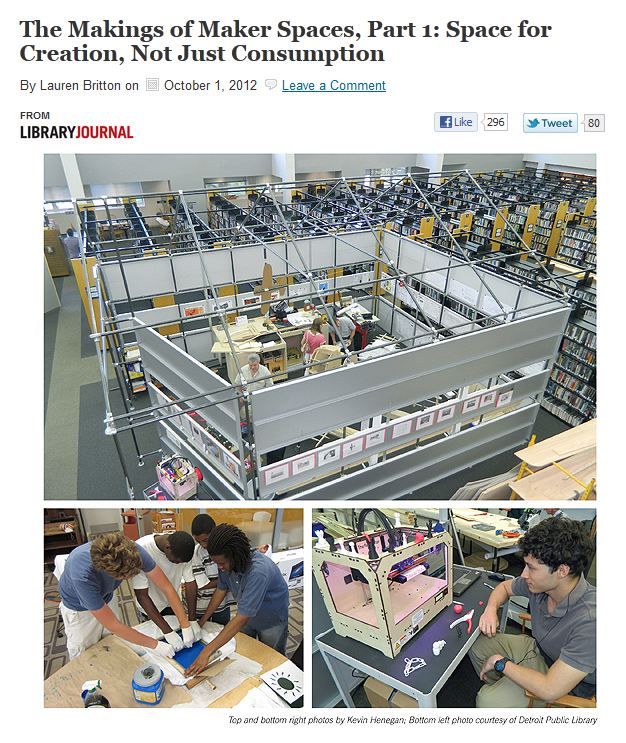
What is a makerspace? These are spaces that provide equipment and resources for people to collaborate on projects and make things. That's it in a sentence, but they are really much more. For more detail, read the three part series from the October issue of Library Journal.
1. The Makings of Maker Spaces
2. Express Yourself
3. Fabricating a Fabulous Home for CoCreation


There are several notable library blogs that have great information about makerspaces, such as The Unquiet Librarian and Librarian.net. See also this article on Sharable which includes an interview with Lauren Britton, who developed the Fayetteville Free Library Fab Lab and co-authored the three part series in Library Journal.

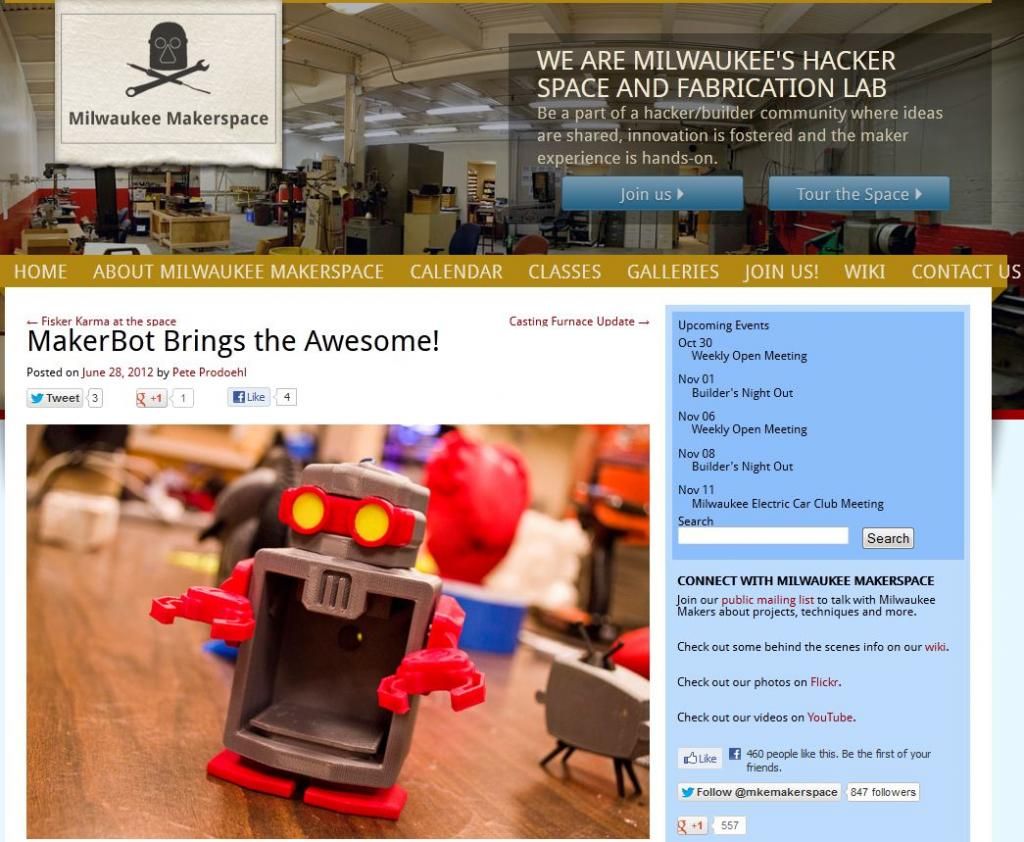
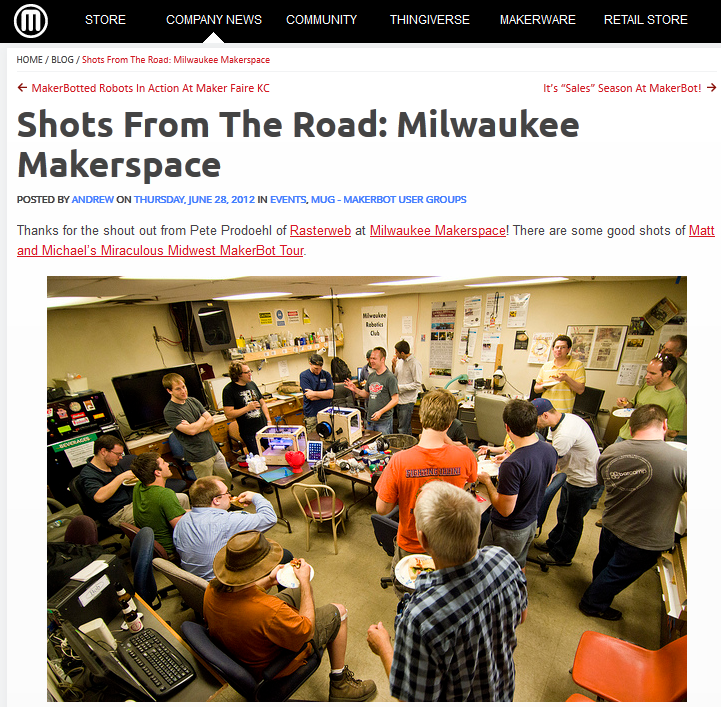
To learn more about makerspaces in public libraries, check out this webinar series from the American Library Association.. There is one recording available from the October 15th session, and three upcoming, November 19, December 3, and January 7. Also read up on Tekventure, an Indiana effort to provide makerspace to the public. For images of what these spaces can look like, check out these articles from Makerbot.


Sunday, October 7, 2012

Historical Medical Library of the College of Physicians of Philadelphia

A few weeks ago I spent a weekend in Philadelphia with my husband. It was my first time in the city and we did the usual visit to the birthplace of democracy; Independence Hall, the Liberty Bell, Betsy Ross's house, Ben Franklin's print shop and post office, and Elfreth's Alley. We barely scratched the surface of things to do, but only had one day in the city. We decided to spend the afternoon visiting the Mütter Museum.
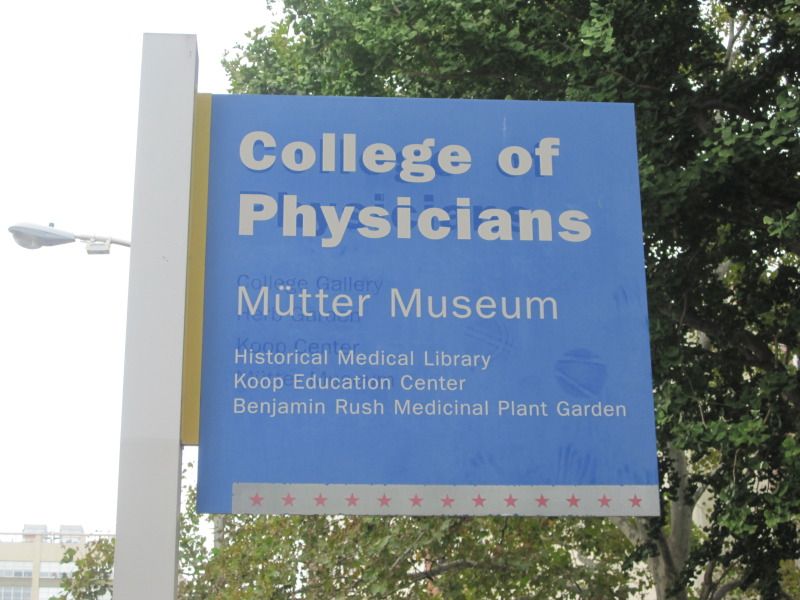
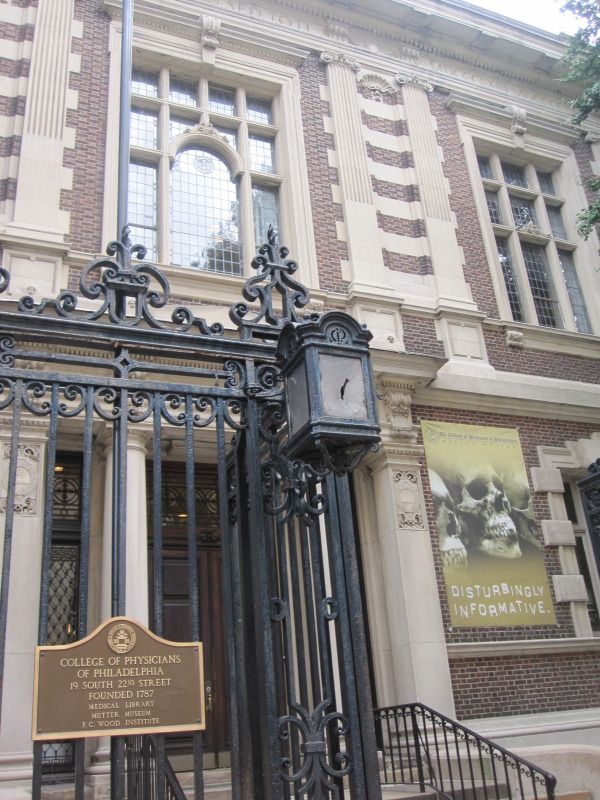
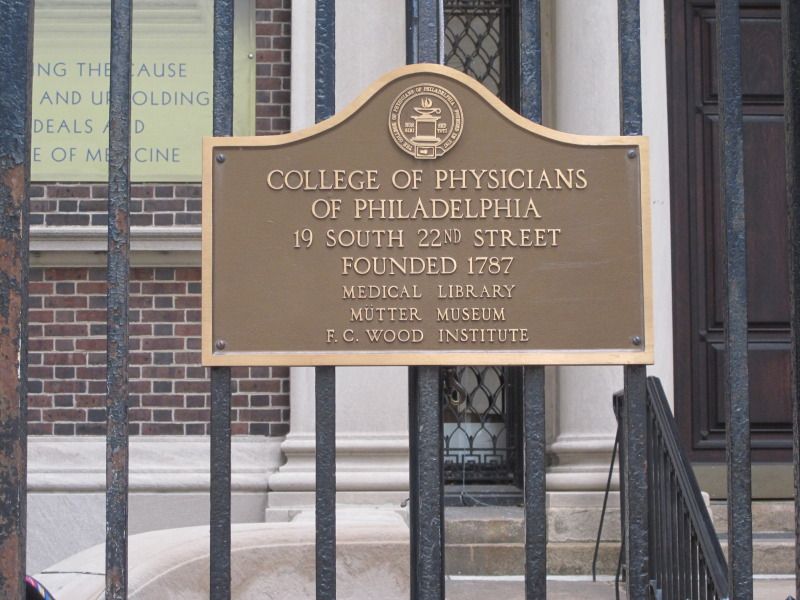
Mutter Museum and Medical Library Sign
The museum is amazing. It definitely has disturbing elements. For me, the wall of fetal deformities was a little difficult to take in. There were exhibits linking Grimm's Fairy tales to medical conditions, and I learned more than I ever intended about skin conditions and the assassinations of Lincoln and Garfield. Check out this article from the British Society for the History of Science Travel Guide for more information about the museum. There was a wonderful quote on a display description that sums up the importance of the collection well.

"A great museum collection is as important to medical education as a great library because specimens are nature's books"

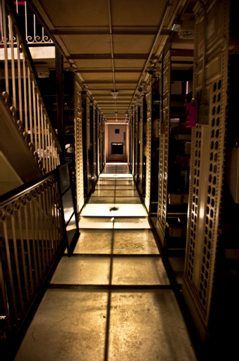
picture of the stacks from the library website While at the Mütter I learned about the Historical Medical Library also housed in the building. Established in 1788, it's one of the world's premier research collections into the history of medicine. Over 400 incunables, manuscripts, archives, and 19th and 20th century medical journals. Sadly, I did not have an appointment, so I could not visit the stacks. The library is open by appointment only Tuesday, Wednesday, and Thursday, 10:00am to 4:00pm.

If you want to see specifics, you can search the catalog online. The Catalog search help is fairly comprehensive if you would like a tutorial in how to use their catalog system.

Also available for distance visitors are the digital resources, Digital Books and two digitized 18th Century Manuscripts.

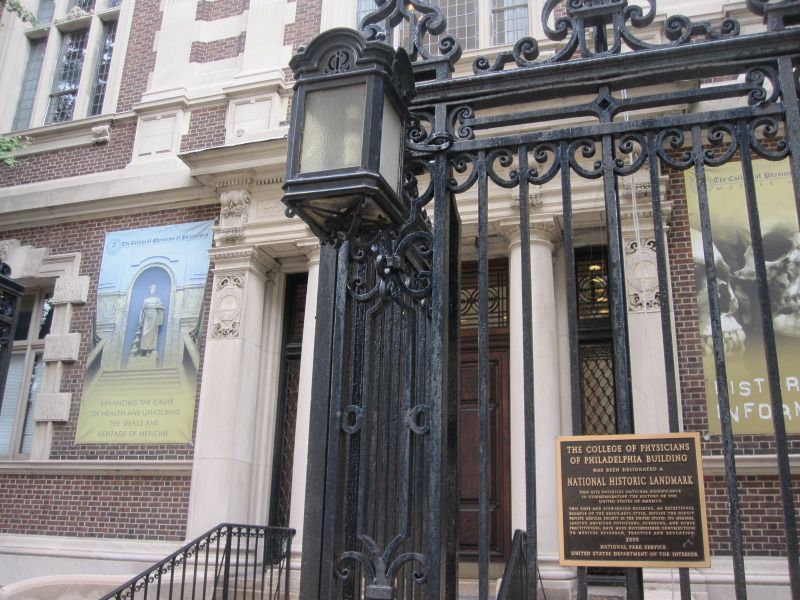
See the library website for history of the collection, or read this very informative article from the Pennsylvania Center for the Book, which is part of the Literary and Cultural Heritage Map. Photos are not allowed within the museum so these shots of the door and the one taken from the library website above will have to satisfy your visual cravings.
Mutter Museum and Medical Library Entrance

Sunday, September 30, 2012

The Floral Library

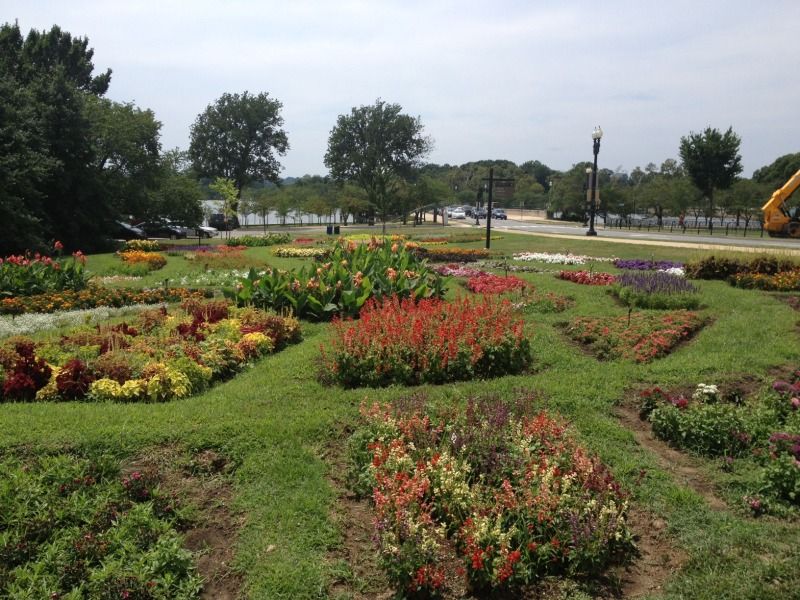
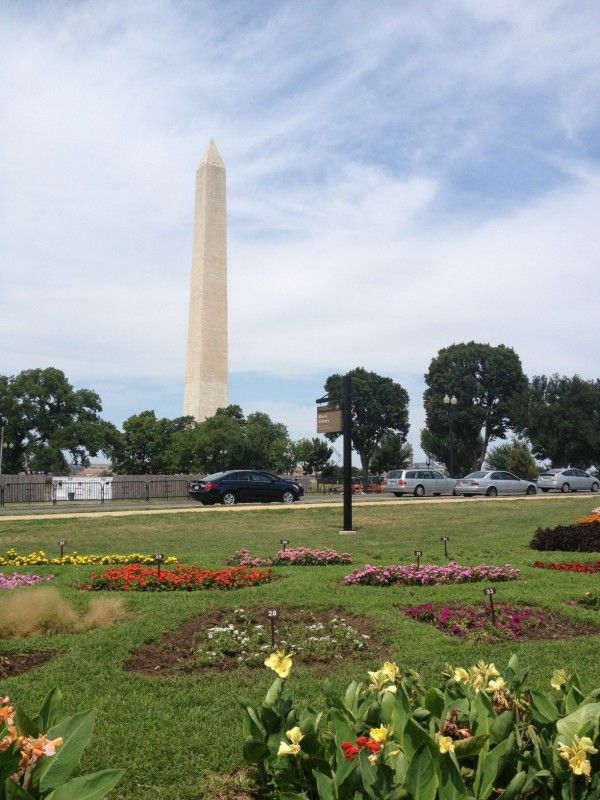
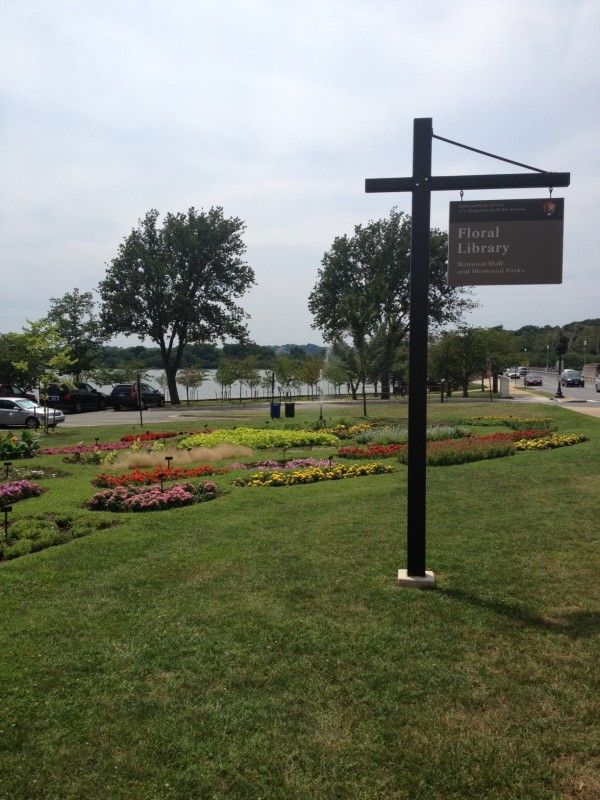
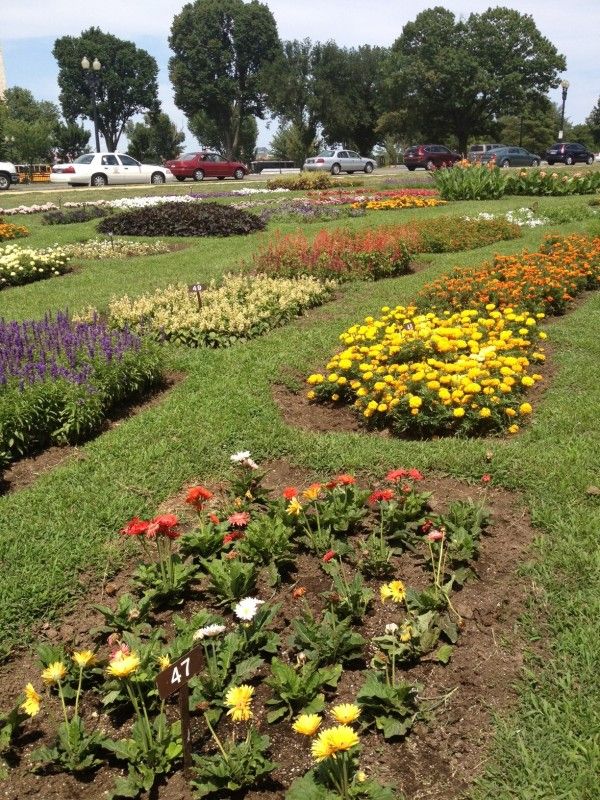
If you've ever found yourself near the tidal basin in Washington, DC, just across the Kutz bridge and looked to your right at the intersection of Independence and Marine Ave, you may have seen some flower beds and wondered, what's up with those? The beds are the Floral Library, maintained by the National Parks Service National Mall & Memorial Parks department. Also known as the 'Tulip Library', the 93 beds were founded in 1969 as part of Lady Bird Johnson's Capital Beautification Project.
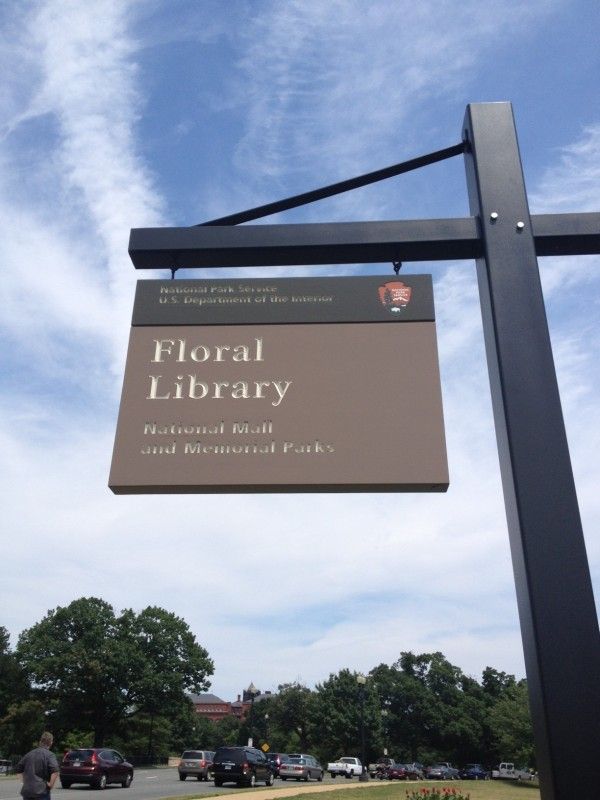
I had the wonderful opportunity to interview Alice McLarty, Landscape Architect, and Maureen Joseph, Regional Historic Landscape Architect, about the floral library. There are few links online that talk about the library's history or current care. This one mentions the tulip garden, however the article from the National Park Service is actually almost exclusively about tulips. Alice and Maureen were kind enough to fill me in on the details. I'd like to say that their jobs are fascinating. I'd talk more about them, but this post would go on forever. I'll just say I love being a librarian, but were I to go back in time and have a choice, I might choose historic landscape architect as a career.

When the library began to bloom in the spring of 1969, there were 95 varieties of tulips planted in groups of 100 to 200. Then Regional Director Nash Castro said in a press release from March 1969, "The concept of the library is to give interested persons an opportunity to study and compare the tulip varieties as well as view them at close range and at a leisurely pace." There were three seasonal plantings with Tulips in the spring, annuals in the summer, and chrysanthemums in the fall

The beds haven't changed much in the intervening 43 years. There are now 93 beds due to sidewalk widening a few years ago. There are two planting seasons, tulips and annuals, and the annuals tend to last into the fall. The ground maintenance staff maintains the beds and McLarty manages the ordering and evaluates how plants are doing. McLarty said of the selection, "The varieties generally are the same year after year, but with substitutions by the grower for various reasons, and changes by our staff if we see that a particular plant is not doing well. Or if conditions change, such as the elimination of shade loving annuals after the huge elm tree, which had shaded the west end for years, died. We have no shade loving annuals anymore, but someday we will again when the replacement elm gets larger."

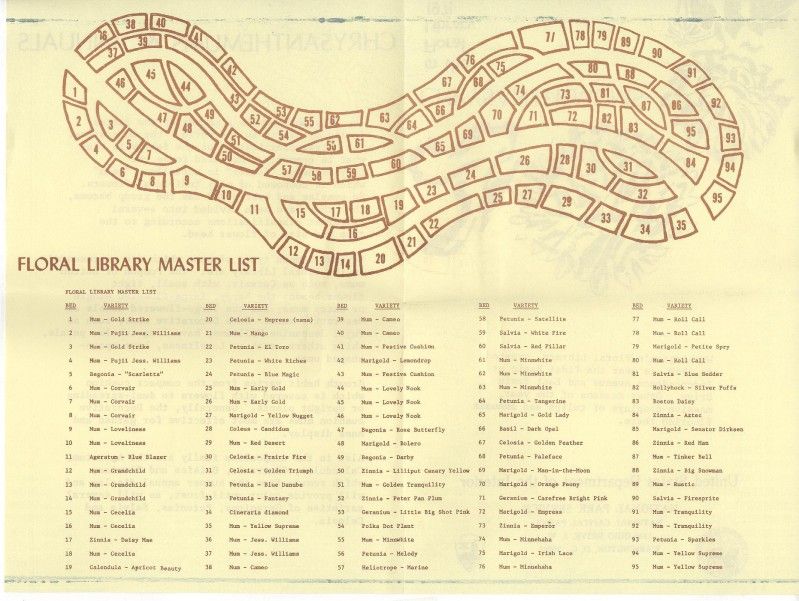
The layout has remained essentially the same. This link takes you to the 2012 library map. You can see the shift from 95 to 93 beds, when compared to this library map for the chrysanthemums from 1971. This announcement shows the original designer, Darwina Neal, among the tulips.
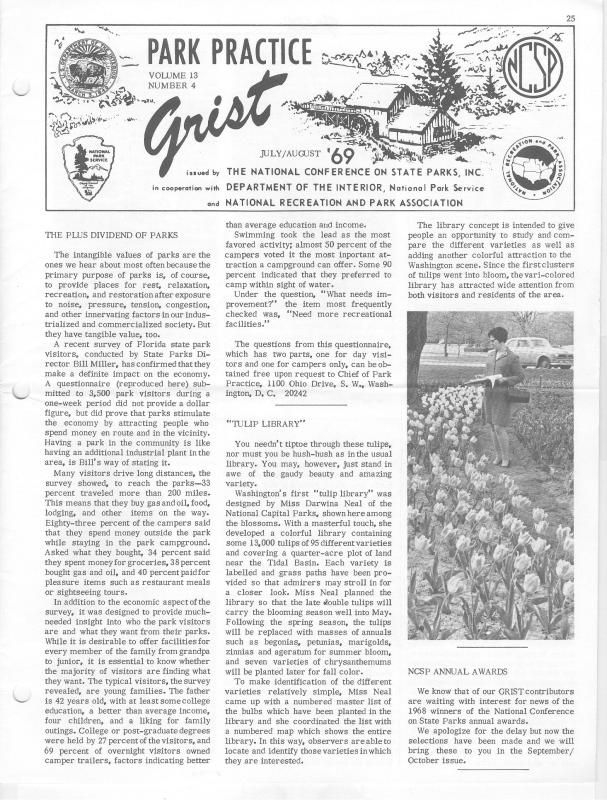
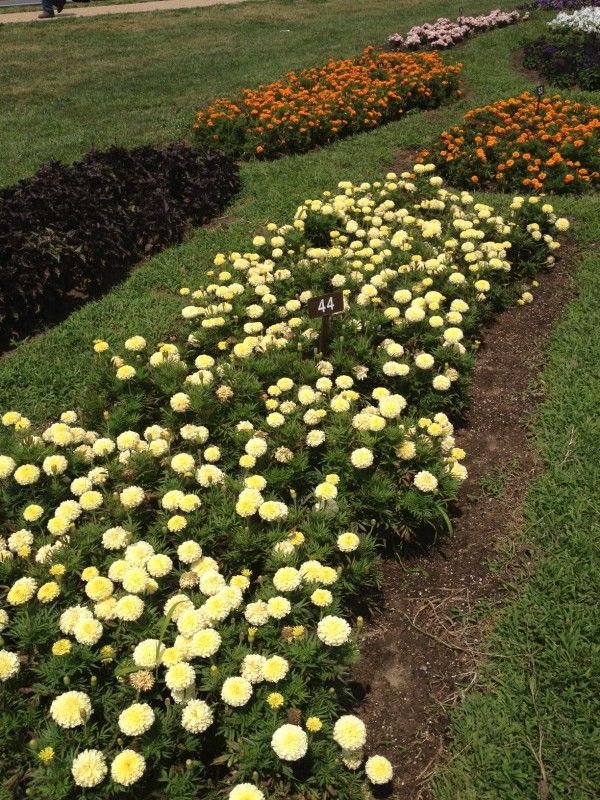
These pictures were taken in July, when the annuals were in bloom. The official name of this library without books is the Floral Library, however many people still refer to the beds as the Tulip Library. It's not known why, as McLarty mentioned, even when it started it had three distinct planting seasons.
Sunday, September 9, 2012

Books that Shaped America

This week I'd like to bring the focus back to the Library of Congress to take a look at the Books that Shaped America exhibit on display now through September 29th. The exhibit is part of the multi-year Celebration of the Book. I visited a few weeks ago and very much enjoyed the experience. The exhibit is located in the Southwest Exhibition Hall in the Jefferson Building on Capitol Hill, just outside the Thomas Jefferson Library Exhibition.

The Jefferson Building is open on Saturdays and there was quite a crowd when I was there. It was nice to hear the common exclamation, "I love that book" and to overhear stories of how a particular title was personally influential, or brought up fond memories spent reading. I saw many books that have mattered to me over the years, and each selection was thought provoking in how its existence and influence helped shape America.

If you are able to visit before the end of the month, I highly recommend it. I also want to plug the National Book Festival, taking place on the National Mall September 22-23. I am glad to be able to check it out this year. If it's a bit far for a visit, check out the list of books online to find your favorites. These are a few of mine.


Sunday, July 1, 2012

Libraries without Books

Merriam Webster defines 'library' as "a place in which literary, musical, artistic, or reference materials (as books, manuscripts, recordings, or films) are kept for use but not for sale" or "a collection of such materials" as the first definition. The second definition is the topic of this week's post as well as an ongoing series of "collection[s] resembling or suggesting a library." There are many library collections that comprise physical materials. These are considered libraries because they function as a library, a "collection of materials that are kept for use but not for sale." Museums tend to be look don't touch to preserve objects for posterity, while libraries (and archives) are for the most part hands on working collections.

[I wrote this post before the news broke about the ATF losing 1,400 guns in an unrelated project, but still wanted to feature the tracing library despite the news.]

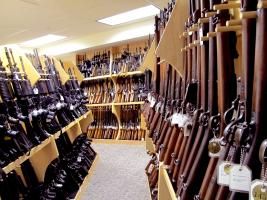
First up, the ATF Tracing Center's gun library, which was featured on Minnesota Public Radio in 2011. The tracing center is, among other things, a resource for law enforcement to trace guns used in crimes. The center receives over 300,000 requests to trace in a year, and keeps a library of over 12,000 firearms as reference for their work. This picture taken from the article is one of many fairly impressive shots of the extensive collection. Check out the article for more photos. Lucky the person who scored the job as library staff here.
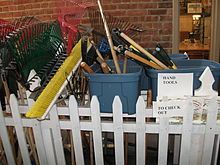
Another common library of physical objects are tool lending libraries. The Berkley Public Library tool lending program. Their program began in 1979 through a grant and is one of the earliest public library tool lending programs.
There are many tool lending libraries in the United States, and Share Starter provides a handy online guide for starting a tool lending program in your area. For more heavy duty projects, there are also subscription services such as Tech Shop where you can gain access to very expensive equipment for those projects you just can't do at home. Here's a shot of the gardening tool collection at the Fletcher Free library in Burlington Vermont (taken from this Wikipedia Article)

There are many more libraries of physical objects outside the standard print, audio, and video media collections than can be covered in one post. These libraries will appear as an ongoing theme of libraries without books, keep checking back for more special libraries to love.