Showing posts with label non-profit. Show all posts

Sunday, January 27, 2013

National Sporting Library & Museum

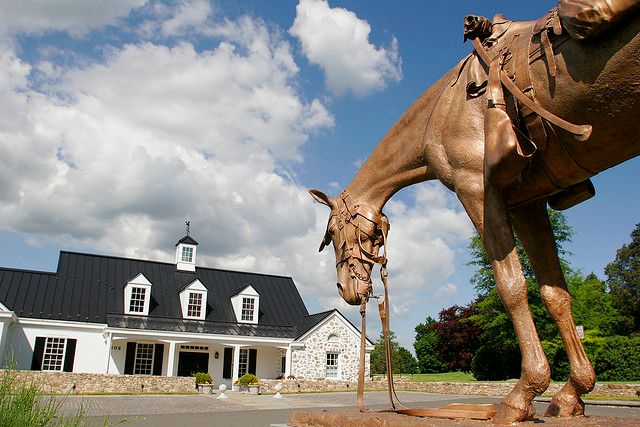
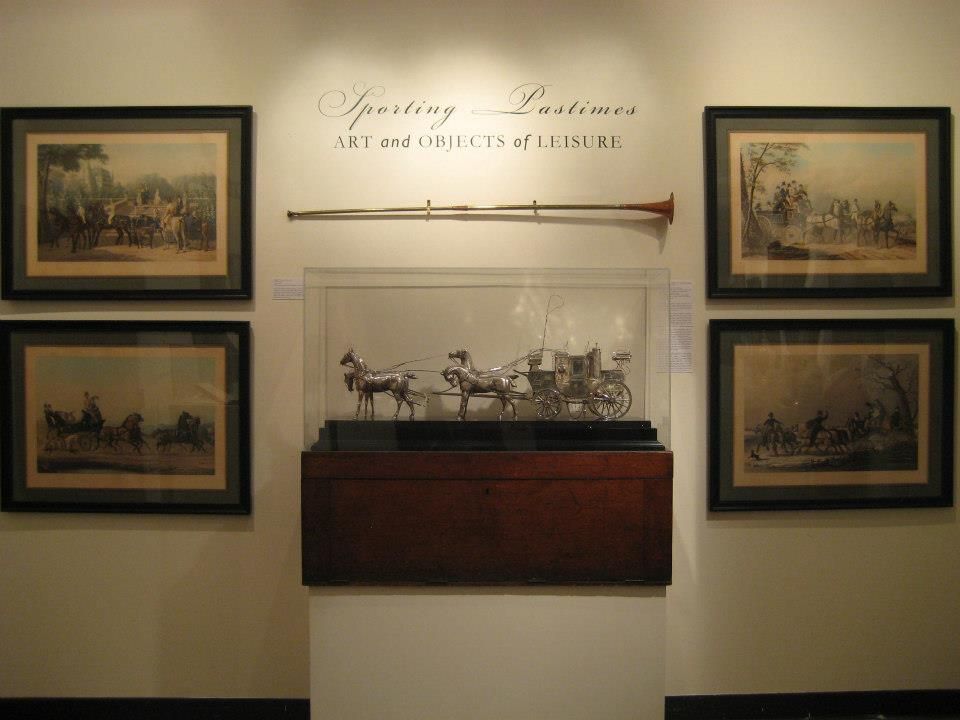
The National Sporting Library & Museum in Middleburg, VA is seeking applications for the John H. Daniels Fellowship. The fellowship supports researchers-in-residence to study and use the collections for research into "a topic exploring the intersection of field sports with the evolution of conservation." Check out the Fellowship brochure for more information. The application deadline is March 1, 2013.

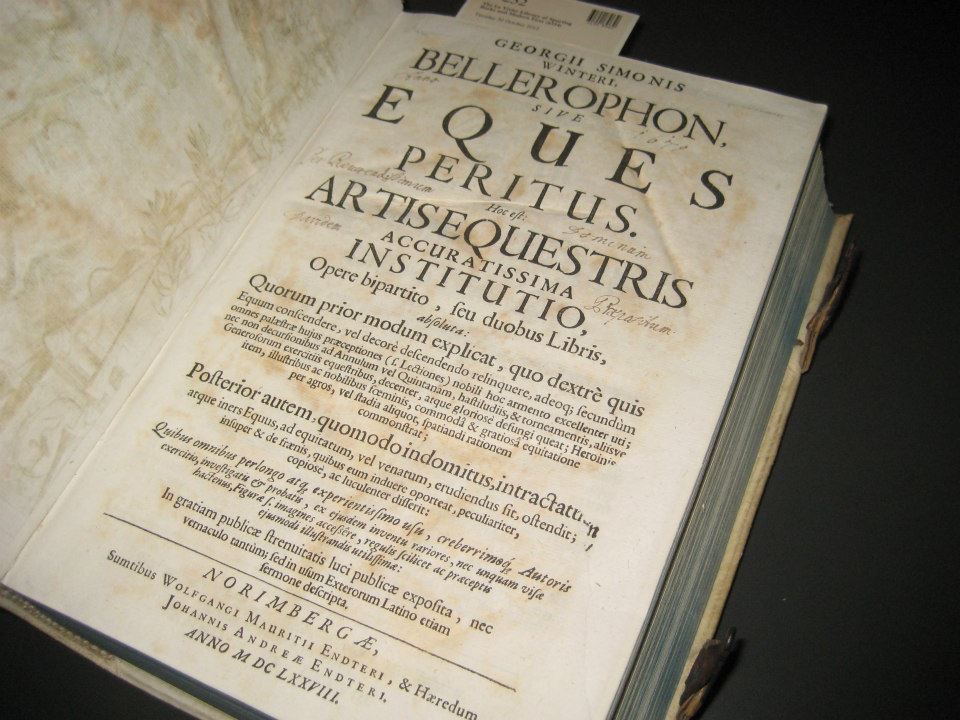
The National Sporting Library & Museum was founded in 1954 and the collections contain over 24,000 works of art and books on field and equestrian sports. The collection boasts items dating back to the 15th century. "The National Sporting Library and Museum is dedicated to preserving and sharing the literature, art and culture of equestrian, angling and field sports." There is an online catalog although it appears you'll need a log in to access it. You can contact the library to find out about access. The manuscript and archive collections contain scrapbooks, papers, photographs and research. Finding aids are available online. The library and museum are both open to the public and free of admission. If unable to visit in person, reference services are available. However, research is limited to 30 minutes per request. If you are curious about the library and collections, read the resource brochures available on the website, or like them on Facebook and check out some of the photos.


Sunday, October 28, 2012

Fayetteville Free Library Fab Lab and Makerspaces

This week I'd like to talk about a concept popping up in public libraries around the country, makerspaces. I've heard buzz about this concept for a while, and then saw the cover of the October issue of Library Journal, with several articles about makerspaces and decided to talk about the topic this week.

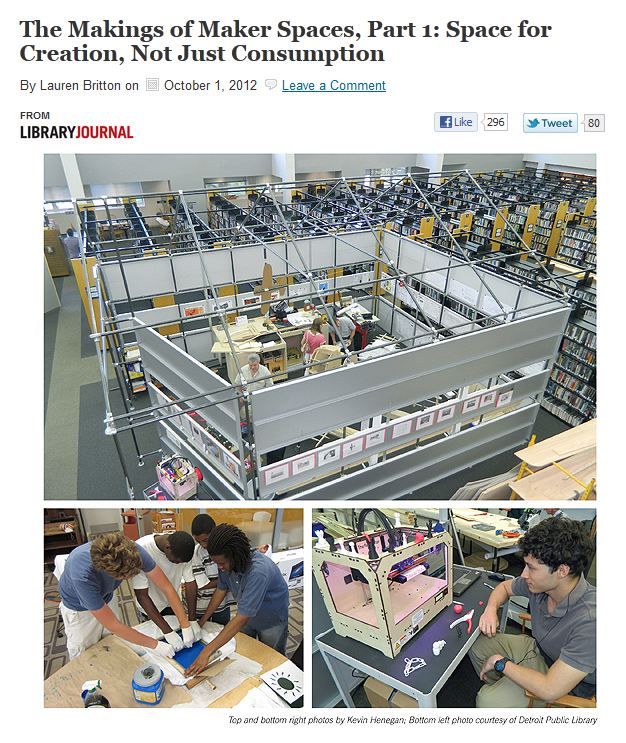
What is a makerspace? These are spaces that provide equipment and resources for people to collaborate on projects and make things. That's it in a sentence, but they are really much more. For more detail, read the three part series from the October issue of Library Journal.
1. The Makings of Maker Spaces
2. Express Yourself
3. Fabricating a Fabulous Home for CoCreation


There are several notable library blogs that have great information about makerspaces, such as The Unquiet Librarian and Librarian.net. See also this article on Sharable which includes an interview with Lauren Britton, who developed the Fayetteville Free Library Fab Lab and co-authored the three part series in Library Journal.

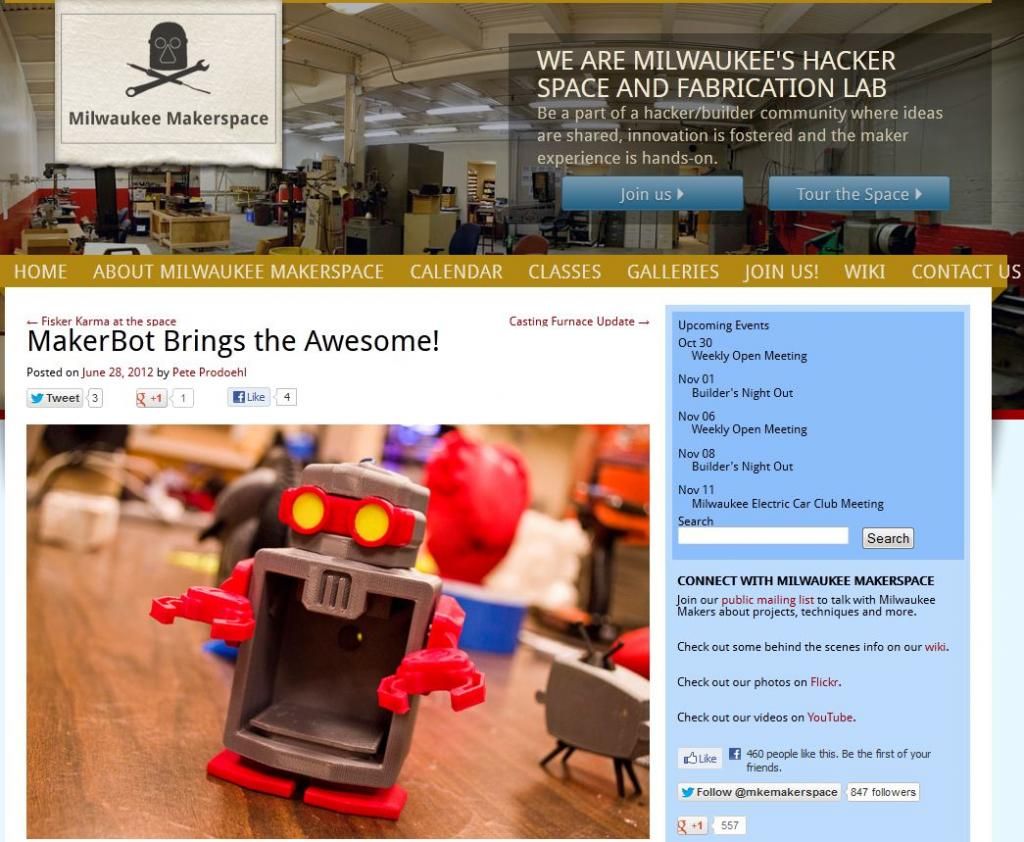
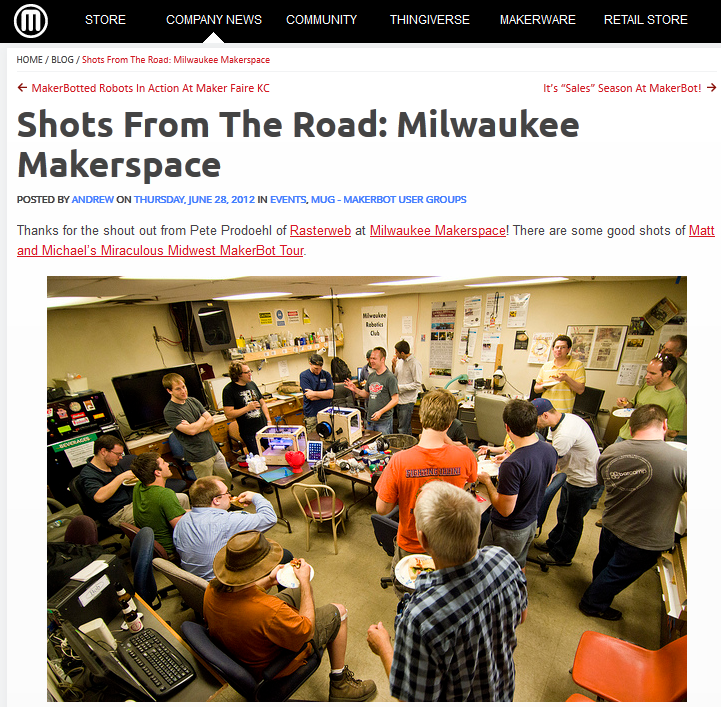
To learn more about makerspaces in public libraries, check out this webinar series from the American Library Association.. There is one recording available from the October 15th session, and three upcoming, November 19, December 3, and January 7. Also read up on Tekventure, an Indiana effort to provide makerspace to the public. For images of what these spaces can look like, check out these articles from Makerbot.


Sunday, October 14, 2012

The Foundation Center

Today's post is about the Foundation Center library in Washington, DC. The Foundation Center is a non-profit organization founded in 1956 and is one of the largest resources on philanthropic organizations in the world. According to the website "Thousands of people visit the Center's web site each day and are served in its five regional library/learning centers and its network of 450 funding information centers located in public libraries, community foundations, and educational institutions nationwide and beyond."

Headquartered in New York, the center maintains four field offices as well as an extensive network of Cooperating Collections. I have not personally visited the library, but filled my information gaps with the helpful video embedded below. Check it out, and definitely visit one of their many locations if you are ever in need of philanthropy resources.

Sunday, August 12, 2012

Little Free Library

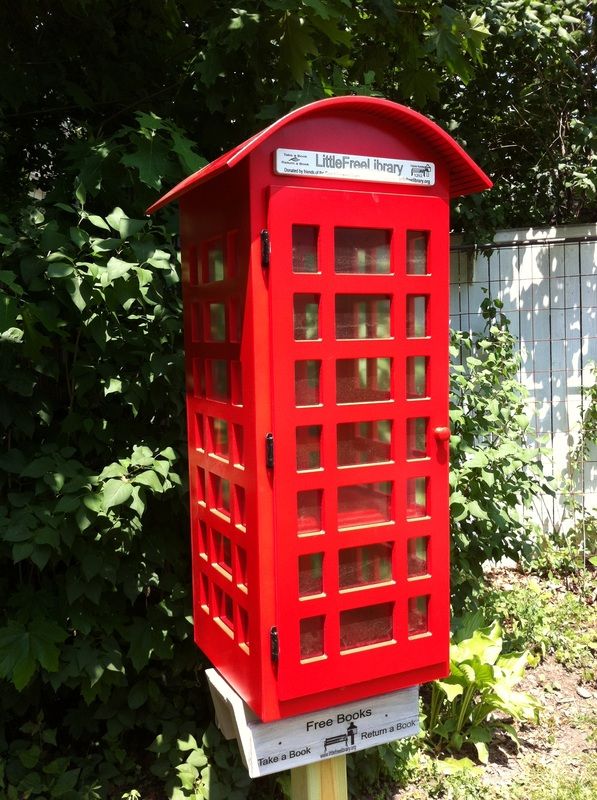
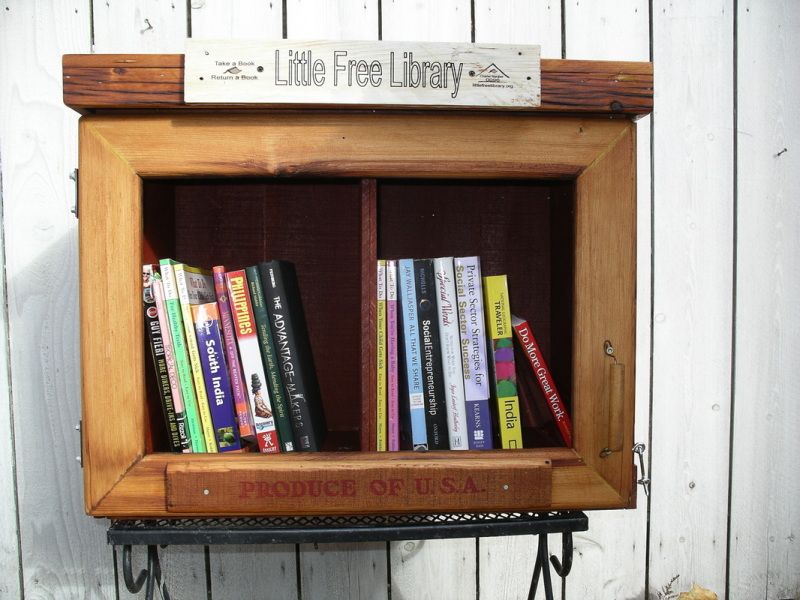
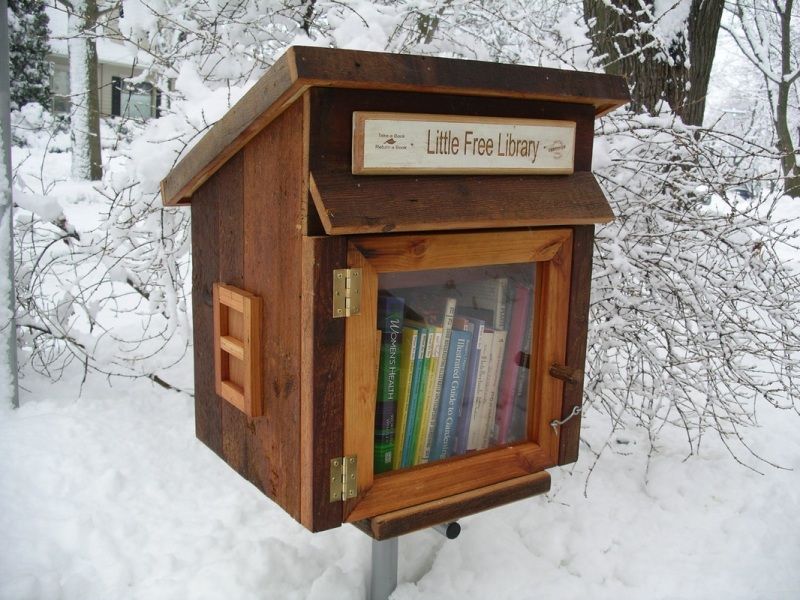
This week's library highlight is the Little Free Library. While not technically a special library, it's an interesting movement and the boxes are fairly adorable. Little Free Library is a movement that started in Wisconsin with a mission to promote literacy and build a sense of community. The Little Free Library is just what the name implies, it's a box with books placed in a publicly accessible area offered for free. People can take a book, replace a book, or add books to the collection. It's an effort to promote reading, share literature, and bring a community together. The movement has picked up momentum in areas, and was recently featured in an article in the Los Angeles Times.

This concept of sharing books in free libraries is not new. Many hostels and businesses catering to travelers around the world have free book shelves. You can pick up a new book to take with you while replacing it with the book you brought with you from your last destination if you choose. There are sites such as BookCrossing which encourage travelers to send their books off into the wilds with a label, which can then be tracked online much like the Where's George project. While BookCrossing considers itself the world's library, Little Free Library is a book sharing effort a little closer to home.

The Little Free Library concept creates special libraries that are community driven and creative in content as well as in structure. You can buy a Little Free Library to put up in your yard, or really get into it by building your own. Check out the FAQ page for answers to questions about damage to the little free library, or placement on public property. I like the answer to, 'what if people steal the books?' You can't steal something that's free. The boxes available on the website are a little pricey, but very cute. If you would like more information about starting a Little Free Library, you can use the contact form on the Little Free Library website.

You could also read more about the movement in this article from the Valpariso, Indiana community news website, or USA Today. Here are a few pictures of the Little Free Libraries taken from the Little Free Library website. I love the red call box.


Sunday, June 17, 2012

Seattle Metaphysical Library

The Student Chapter of the Special Library Association at University of Washington (SLA-UW) hosts 'library crawls' each quarter for students of the Information School. The crawl takes students to special libraries or collections in the Seattle area to introduce them to the variety of opportunities available. Students meet with librarians at the site, tour the collections and discover special libraries. A recent visit to the Seattle Metaphysical Library was written up by SLA-UW secretary Erin Boyington. Vice-Chair Violet Fox took pictures, which are available on this Flickr photo stream. A special thank to Violet and Erin for sharing the tour experience for this blog. Also check out their tour of NOAA Western Regional Center Libraries in May.
--------------------------------------------------------------
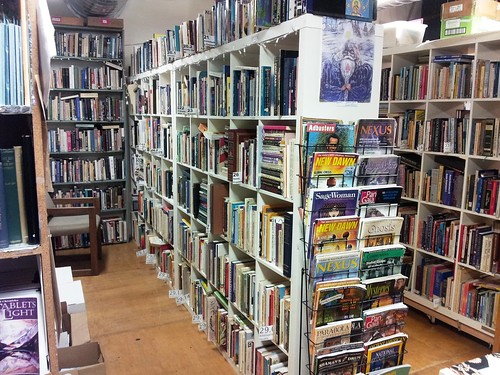
The Seattle Metaphysical Library is a small, subject-focused library that has existed in various forms for 50 years. The original collection was donated by a small group of women who compiled their private libraries and made them available as a hobby. It's been at its current location in Ballard for 6 years. On May 18th we joined Margaret Bartley, the Executive Director of the library, for a tour of this fascinating collection.

The library is open to the public and has a selection of books for sale (both in person and online), but only members can check out books for three weeks at a time. Membership costs $30 a year, and there are about 200 people on the roster. The library organizes events such as classes, workshops, and speakers on a variety of subjects related to its members’ interests.

The Seattle Metaphysical Library is staffed by dedicated volunteers who are interested in metaphysical subjects. They do occasional weeding, reorganization, check out books to members, and make passers-by feel welcome as they enjoy the library’s offerings. Ron, one of the volunteers, said that he considers his work there as a kind of “sacred duty”, which he has been doing now for many years. He explained that “A lot of my metaphysical ideas have developed over time from reading in the library.” Another volunteer, Cathy, agreed: “Being around so many different types of thought opens your mind.”

The library’s eccentric holdings, available to browse online, consist entirely of personal donations. The advantages of browsing and serendipitous finding in this collection are obvious to its users, who may have difficulty finding books about their areas of interest through Amazon or general bookstores.

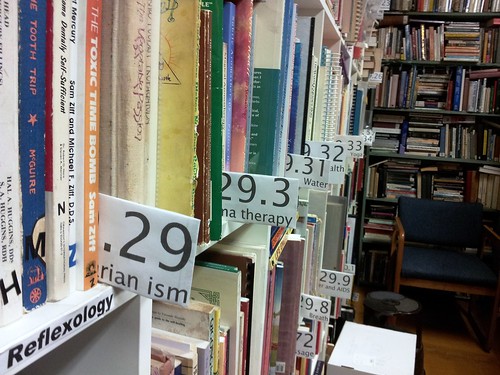
The library's materials are well-organized by a customized cataloging system which allows for the addition of new categories as needed. Here are a few examples of the categories in the library, which are grouped alphabetically:

Alchemy
Astrology
Bibles
Buddhism
Cookbooks
Elves, Little People
ESP
Face on Mars
Fasting
Graphology
Gurdijieff
Huna
Islam
Charles W. Leadbeater
Mme. Blavatsky
Muktananda
Noah’s Ark
Nutrition
Parapsychology
Parenting
Patanjali
Radionics
Shamanism
Tarot
Theosophy
Transcendental Meditation
UFOs
Vedic

Though it may be an unconventional collection, the Seattle Metaphysical Library’s major concerns and needs are like any other library: preservation, access, organization, and promotion of the unique resources it offers.
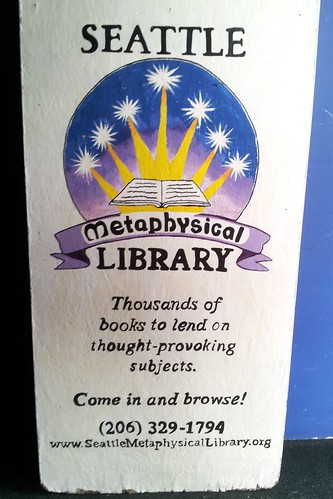
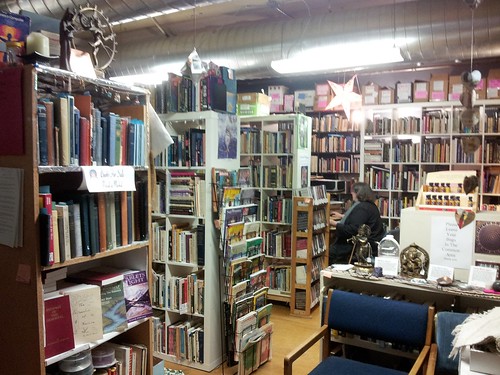
Seattle Metaphysical Library sidewalk sign
Seattle Metaphysical Library

Sunday, May 13, 2012

National Public Radio (NPR) Library

Special libraries are found within many different types of organizations, such as broadcast networks. Many have internal libraries and librarians which provide archival, research, information retrieval and reference services. These library collections are often closed to the public, focused on serving the needs of direct staff and affiliates. Librarianship within media organizations is a fascinating part of special libraries. In an article from American Journalism Review, in 1995, the 'news librarian' was described as, "the collectors, managers, and re-distributors of the organization's primary product, information. This is critical in all stages of information's flow through the organization – initial information gathering for use in news reporting, in the collection of the news product into databases, in the repackaging of information created by the organization into new products." Much has changed in the industry in the last fifteen years, however the role of collector and manager of the organization's content is still a vital one.

NPR is a non-profit privately and publicly funded membership media organization. The content produced by NPR is nationally syndicated to over 900 public radio stations in the United States. The NPR library does not have a publicly accessible website, as their collections are not available for circulation and reference outside of NPR affiliated patrons. The collection consists of archival audio of NPR produced shows, collections of commercial music and spoken word (films, tv shows, speeches, poetry). Library staff do have a twitter account that is well worth following. The tweets often highlight stories on the NPR website such as this one about the The Most Gigantal, Behemothian Thesaurus In The World

The NPR website is full of ancillary information about the library. An example is this post from This is NPR about a request for Generic Superhero Music for a taping of All Things Considered. A search of the NPR website for "NPR Library" returned 56 results, a mixture of heard on air, blogs, multimedia, and full-text stories. Browsing through the results provides some background on the work and efforts of library staff at NPR. For further information about NPR in general, the Wikipedia site is rather robust, and contains an extensive list of references. The NPR library won the ALA Information Today, Inc. Library of the Future Award in 2012 for the Artemis training project. This article discusses the work at NPR Library in more detail, and this is a DC/SLA tour report from 2010.

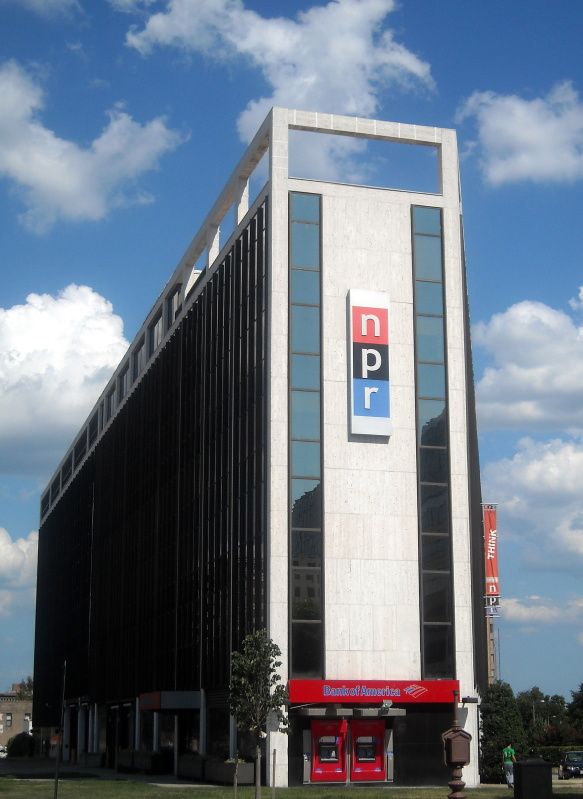
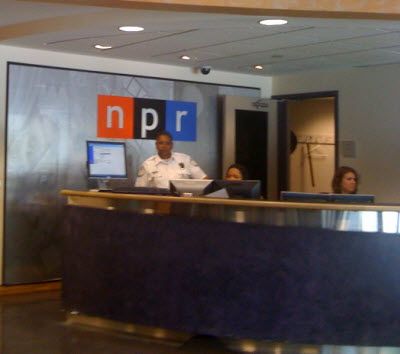
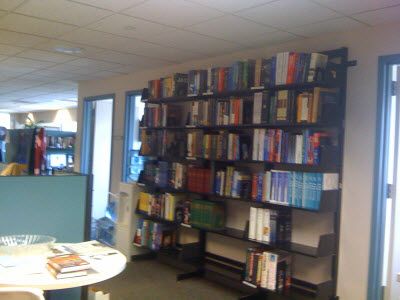
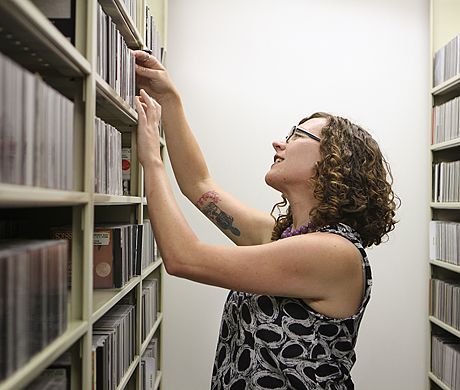
I did not take any pictures of the space when I had the opportunity to tour the NPR library. I found a nice one on NCinDC’s Flickr Photostream of the NPR headquarters building. I also found a tour write up from the Medical Library Association 2010 conference with some pictures of the space, and one of former intern (now Music Librarian) Jane Gilvin from NPR's Intern Edition Blog searching the CD shelves, published in August 2011.